
Bond Repair Treatments: Do You Actually Need Them, or Is It Marketing?
Bond Repair Treatments: Do You Actually Need Them, or Is It Marketing?
Walk down any hair care aisle, online or offline, and "bond repair" is stamped on nearly everything now. Shampoos, conditioners, serums, all promising to rebuild broken bonds inside your hair. It sounds scientific and a little urgent, like something you should probably be doing. But what does it actually mean, and does your hair really need it?
What "Bonds" Actually Are
Hair strands are held together partly by disulfide bonds, chemical connections within the protein structure of your hair. Chemical processes like coloring, bleaching, and straightening break a significant number of these bonds, which is part of why heavily processed hair often feels weaker and more prone to snapping. Heat styling and even excessive mechanical stress, like rough towel-drying, damage them too, though usually to a lesser degree.
What Bond Repair Products Are Actually Doing
- Genuine bond-building ingredients. Some formulations do contain ingredients capable of temporarily linking broken bonds, offering a real, if temporary, strength improvement.
- Surface conditioning agents. A lot of "bond repair" products lean heavily on standard conditioning ingredients that make hair feel smoother, without meaningfully addressing the internal bond structure at all.
- Marketing language stretched thin. The term has become so widely used that it's often applied to products that are really just good, ordinary conditioners with a trendier name attached.
The honest reality is that genuine bond repair technology exists and does work to a degree, but it's not present in every product wearing the label, and even the ones that do contain it aren't permanently fixing anything. Damaged hair stays damaged. These treatments manage and reduce further breakage rather than reversing what's already happened.
The Ayurvedic Perspective: Strengthening From Root to Strand
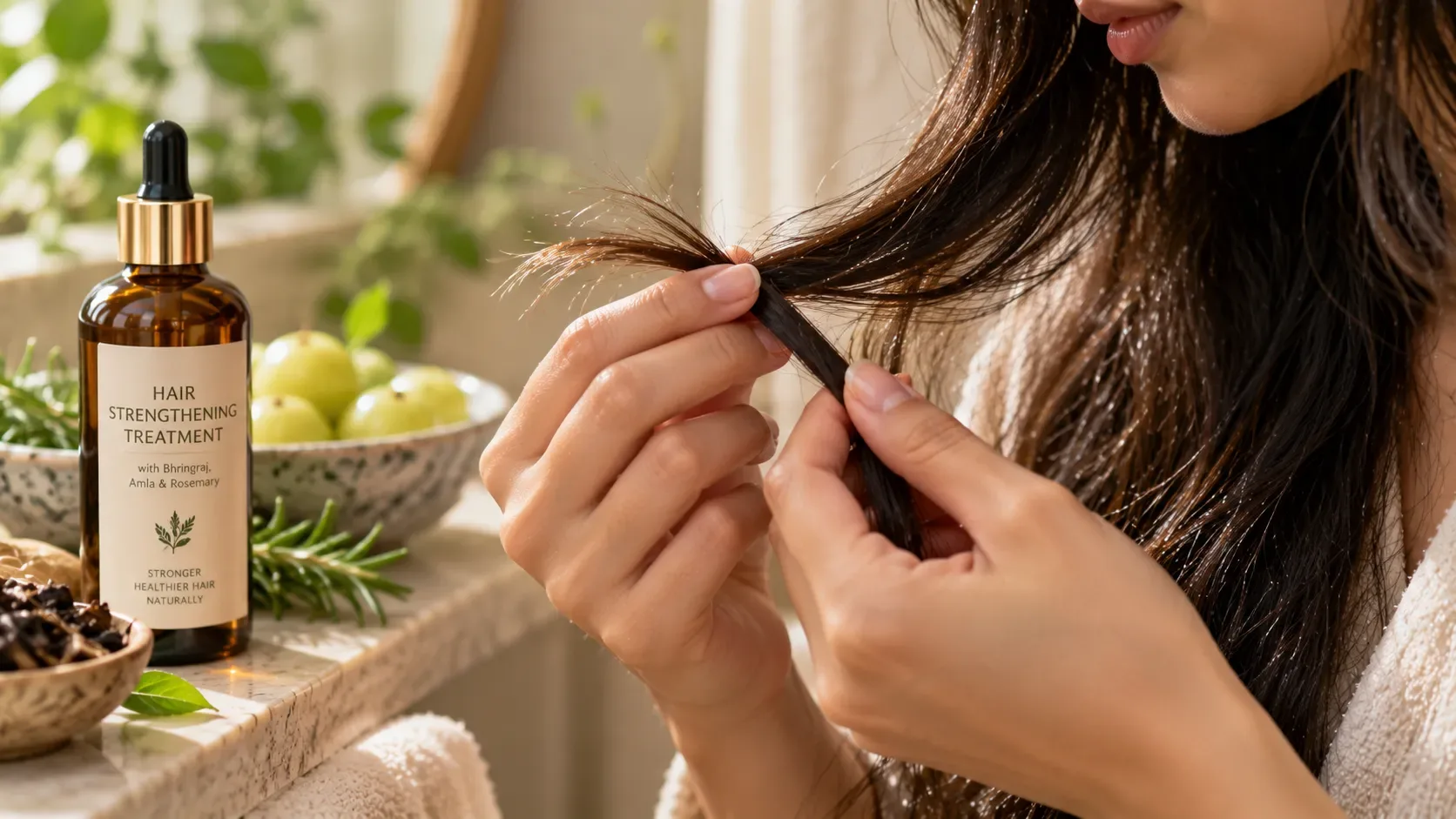
Ayurveda approaches hair strength a little differently, focusing on nourishing the hair from the root outward rather than isolating a single internal bond structure. Ingredients like amla, rich in vitamin C and antioxidants, and bhringraj have traditionally been used to support the protein structure of hair through consistent, gradual nourishment rather than a single intensive treatment. It's a slower approach, but one that addresses hair health more holistically, supporting new growth as well as existing strands.
Who Actually Needs Bond Repair Treatments
- People who color, bleach, or chemically straighten their hair regularly
- Anyone using heat styling tools multiple times a week without much protection
- Hair that's visibly weak, breaking mid-length, or losing elasticity when stretched gently
If none of that describes you, a good, consistent nourishing routine likely does just as much for your hair's strength as a dedicated bond repair product would. Our Hair Care range includes strengthening formulations with amla and bhringraj that support hair health from the root, a gentler, more sustainable approach for hair that isn't dealing with heavy chemical processing.
The Honest Verdict
Bond repair is real science, but it's also become a marketing shorthand slapped onto far more products than genuinely deliver on it. If your hair is heavily processed, look for products with actual proven bond-building ingredients rather than just the label. If it isn't, consistent nourishment probably serves you better than chasing every trending claim on the shelf.
Top Posts


Popular Terms
Leave a Response
Your email address will not be published. Required fields are marked *