
Skin Barrier Repair: The Trend That's Actually Backed by Real Science
Skin Barrier Repair: The Trend That's Actually Backed by Real Science
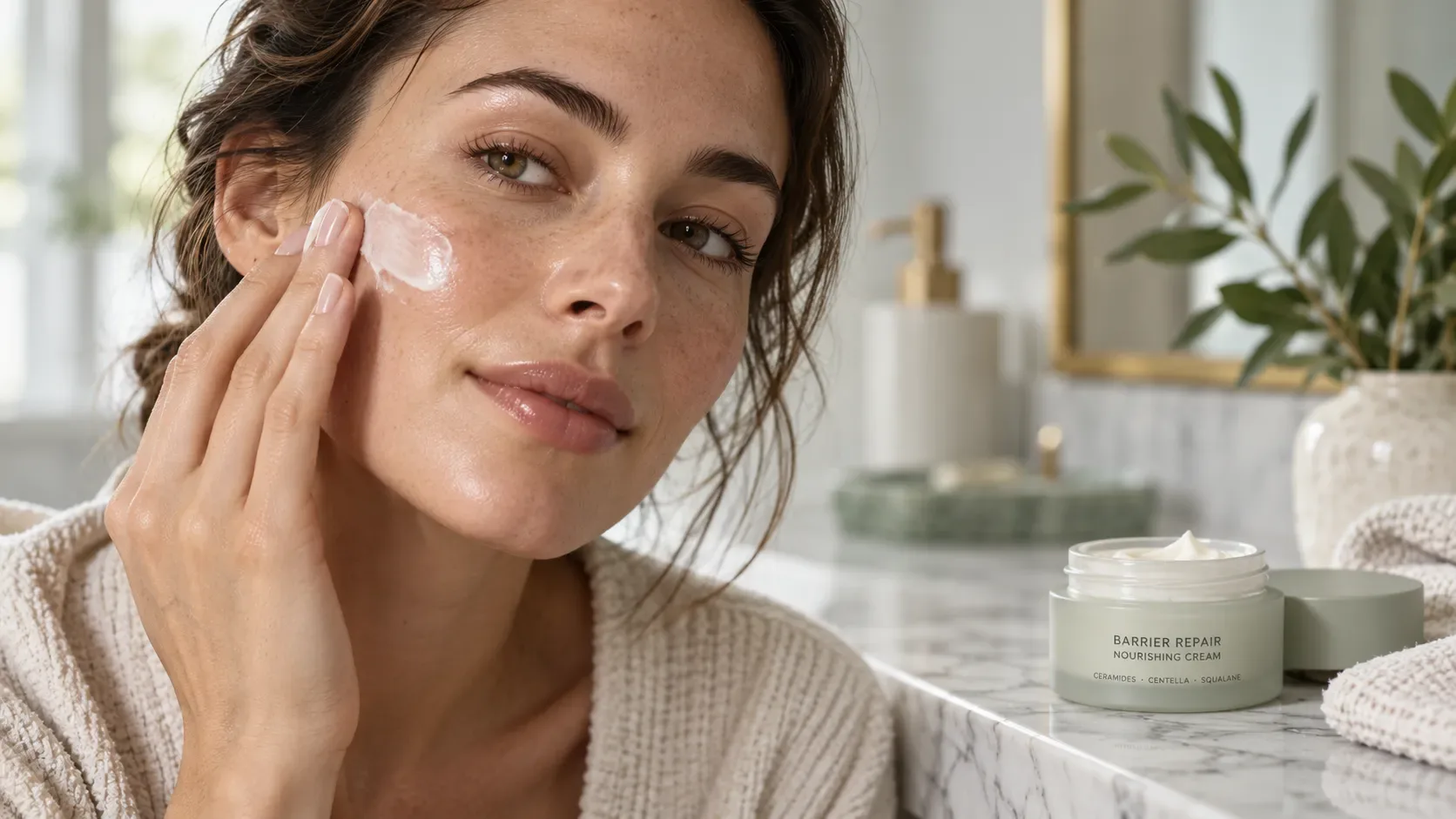
Your skin feels tight after washing. It stings a little when you apply products that never used to bother you. Redness shows up for no obvious reason, and moisturizer that used to work now just sits on top, doing nothing. If this sounds familiar, you've probably seen the term floating around everywhere lately: skin barrier repair.
Unlike a lot of trends that fade after a season, this one's stuck around because it's describing something real.
What the Skin Barrier Actually Is
Your skin barrier is the outermost layer, made of skin cells held together by lipids, essentially a wall that keeps moisture in and irritants out. Think of it like bricks and mortar. The skin cells are the bricks, and ceramides and fatty acids are the mortar holding everything together. When that mortar breaks down, the wall gets gaps, and that's when the tightness, sensitivity, and stinging show up.
What Actually Damages Your Barrier
- Over-exfoliating with acids, scrubs, or retinol used too frequently
- Harsh, foaming cleansers used twice a day
- Hot water on the face
- Layering too many active ingredients at once, especially incompatible ones
- Extreme weather, both dry cold air and intense heat
A lot of people damage their barrier while chasing glow or trying to fix a different problem entirely, using stronger and stronger products when their skin was already asking them to slow down.
The Ayurvedic Perspective: Protecting Rather Than Stripping
Ayurveda has always treated the skin's outer layer as something to nourish and protect rather than aggressively treat. The philosophy leans on gentle, oil-based cleansing and consistent, mild nourishment rather than harsh, frequent stripping. This lines up closely with what modern barrier science is now confirming. A weakened Vata-aggravated skin, dry, sensitive, easily irritated, responds far better to calm, consistent care than to another round of active ingredients layered on top.
Signs Your Barrier Needs Repair
- Stinging or burning with products that used to feel fine
- Persistent tightness, even right after moisturizing
- Redness or a rough, uneven texture that's appeared recently
- Breakouts in new areas, as a compromised barrier struggles to regulate oil properly
How to Actually Repair It
- Simplify immediately. Cut back to a gentle cleanser, a barrier-supporting moisturizer, and sunscreen. Pause all acids, retinol, and scrubs for at least two to three weeks.
- Use lukewarm water, not hot. Hot water feels good but breaks down the barrier's lipid layer faster than almost anything else in a routine.
- Look for ceramides and nourishing oils. These directly replace the "mortar" your barrier has lost, rather than just sitting on the surface.
Our Skin Care range includes formulations designed to calm and nourish compromised skin without introducing new irritants, a gentler starting point while your barrier rebuilds.
Recovery Takes Time, Not a Miracle Product
A damaged barrier typically takes anywhere from two to six weeks of consistent, gentle care to genuinely recover. There's no single serum that fixes it overnight, no matter what the packaging claims. The real fix is almost always doing less, more consistently, rather than adding one more product to an already overwhelmed routine.
Sometimes the most effective skincare move is simply stepping back and letting your skin catch its breath.
Top Posts

Popular Terms
Leave a Response
Your email address will not be published. Required fields are marked *