
Niacinamide for Pigmentation: Why This One Ingredient Is Everywhere Right Now
Niacinamide for Pigmentation: Why This One Ingredient Is Everywhere Right Now
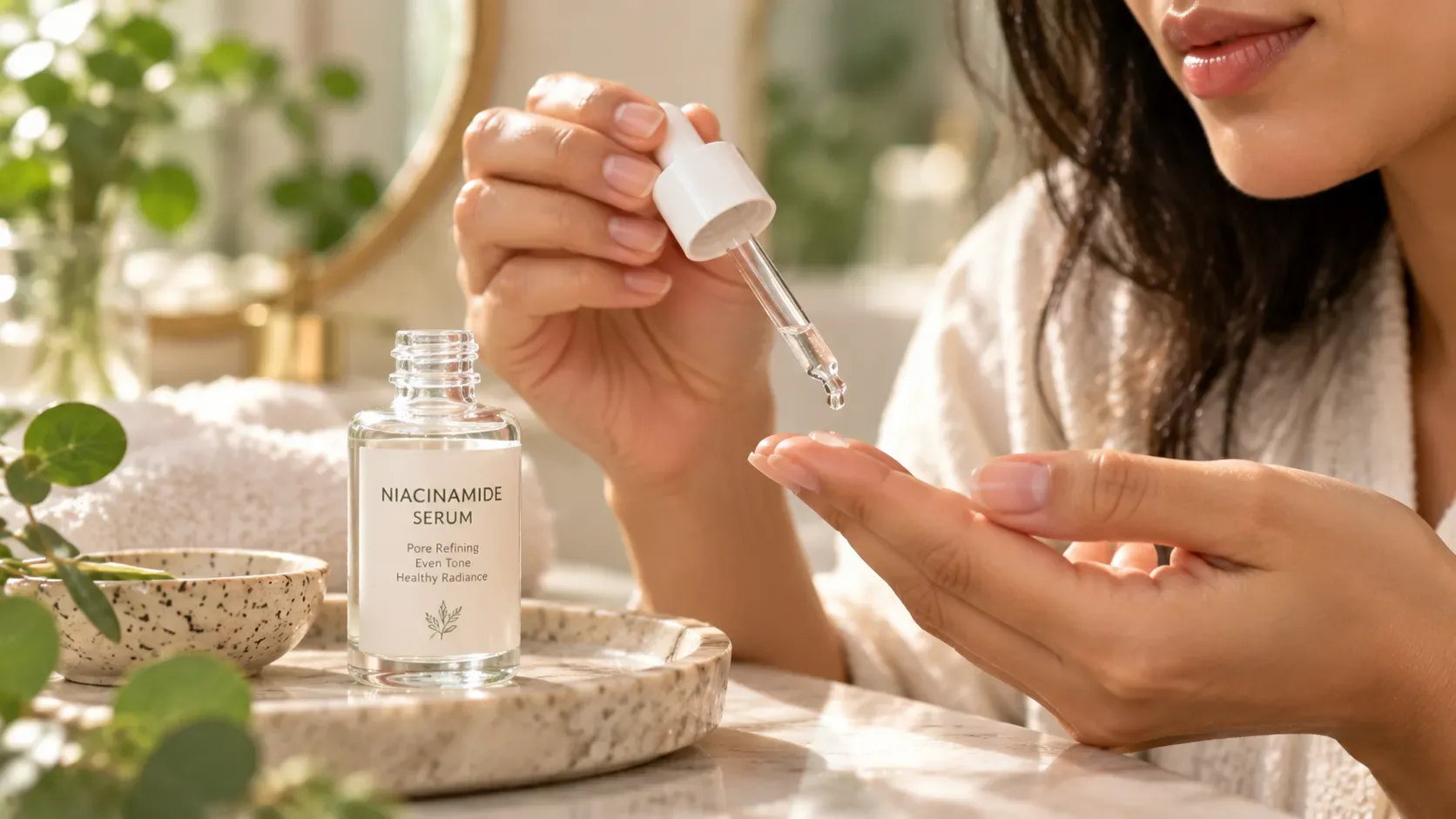
Check the ingredient list on almost any serum right now, and there's a good chance niacinamide is somewhere near the top. It's become one of the most trusted, most talked-about actives in skincare, and unlike a lot of trending ingredients, this one has genuinely strong research behind it.
What Niacinamide Actually Is
Niacinamide is a form of vitamin B3, and it's remarkably well tolerated by most skin types compared to more aggressive actives like acids or retinol. It works through several mechanisms at once, which is part of why it's earned such a broad reputation rather than being a one-trick ingredient.
How It Actually Helps With Pigmentation
- Slows melanin transfer. Niacinamide interferes with the process by which pigment moves from melanin-producing cells to the surface of the skin, which is directly why it helps fade dark spots over time.
- Strengthens the skin barrier. A stronger barrier means less inflammation, and inflammation itself is a major trigger for post-acne and post-irritation pigmentation.
- Reduces redness. Calmer, less inflamed skin tends to develop less new pigmentation in the first place.
This combination is why niacinamide performs well for pigmentation without the irritation risk that comes with stronger brightening actives like hydroquinone.
The Ayurvedic Perspective: A Familiar Goal, A New Vehicle
Evening out skin tone and reducing Pitta-driven inflammation and discoloration has always been a central goal in Ayurvedic skin care, traditionally approached through ingredients like turmeric and licorice root, both known for calming and brightening effects. Niacinamide, in a sense, achieves a similar outcome through a different, more concentrated delivery method. The goal hasn't changed. The tool used to get there has just become more refined and easier to formulate consistently.
What Niacinamide Doesn't Do
- It doesn't work overnight. Most visible improvement in pigmentation takes eight to twelve weeks of consistent use.
- It doesn't replace sunscreen. New pigmentation forms just as easily while old spots are fading if sun protection isn't consistent.
- It's not a substitute for treating deep, stubborn pigmentation caused by hormonal factors, which often needs a more targeted, sometimes dermatologist-guided approach.
How to Use It Properly
- Look for a concentration between 5 and 10 percent. Higher isn't necessarily better here, and very high concentrations can occasionally cause mild flushing in sensitive skin.
- Use it consistently, morning or night. Unlike some actives, niacinamide doesn't cause sun sensitivity, making it flexible for either part of your routine.
- Pair it with sunscreen daily. This isn't optional if pigmentation is your actual goal.
Our best fairness cream includes niacinamide alongside traditional brightening botanicals, combining the evidence-backed active with ingredients that have supported even skin tone for generations.
An Ingredient Worth the Hype
A lot of trending ingredients fade once the next one shows up. Niacinamide has stuck around because it consistently delivers, is gentle enough for daily long-term use, and works well alongside almost everything else in a routine. If you're only adding one active for pigmentation, this is a reasonable one to start with.
Top Posts


Popular Terms
Leave a Response
Your email address will not be published. Required fields are marked *