
Hibiscus & Fenugreek: The Original Protein Treatment, Before It Was Trendy
Hibiscus & Fenugreek: The Original Protein Treatment, Before It Was Trendy
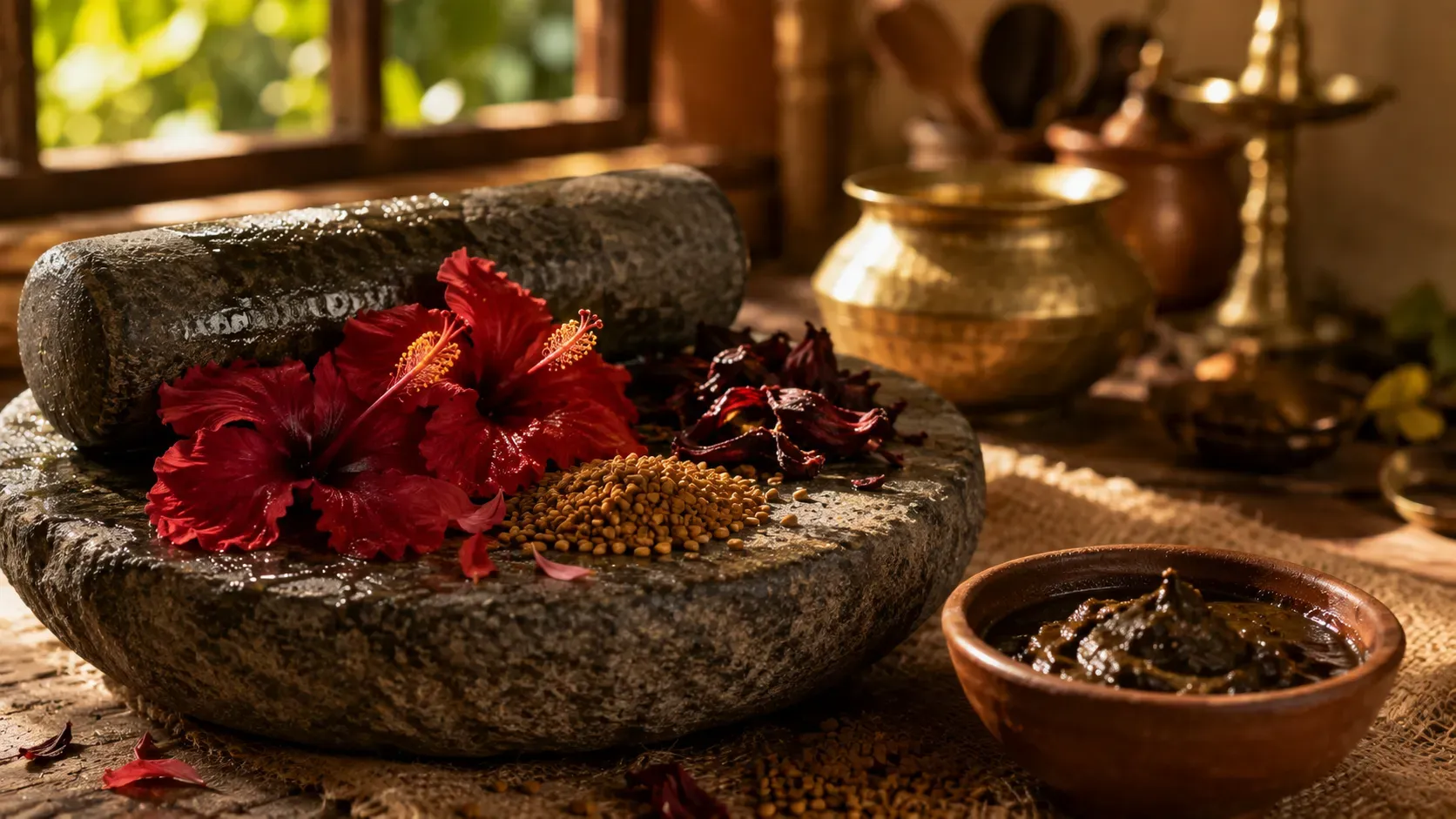
"Bond-repair technology" sounds impressive on a product label. Strip away the branding, though, and a lot of what's being sold as breakthrough science is a modern version of something Indian kitchens have used for generations, hibiscus and fenugreek, ground into a paste and applied to hair long before "protein mask" was a marketing term.
Turns out grandma's remedy and the lab-formulated version are chasing the same result. They just arrived at it from very different directions.
What Each Ingredient Actually Contributes
These two ingredients aren't interchangeable, they each bring something specific to a hair mask, which is part of why they've traditionally been used together.
- Hibiscus: Rich in amino acids and vitamin C, it strengthens the hair shaft, adds natural shine, and is traditionally credited with slowing premature greying and supporting thicker regrowth
- Fenugreek (methi): High in protein and mucilage (a natural gel-like substance), it conditions deeply, softens hair, and helps reduce breakage from the very deficiency modern protein masks are designed to target
- Together, they create a mask that's simultaneously strengthening and conditioning, addressing both structural weakness and dryness in a single application
That combination, protein plus moisture in one treatment, is actually a fairly sophisticated formulation approach. It just happens to have been done at home with a grinding stone long before it had a scientific name.
The Ayurvedic Perspective: Nourishing the Root, Not Just the Strand
Ayurvedic hair care has always treated the scalp and root as the priority, with the strand benefiting as a downstream effect. Hibiscus, in particular, is associated with supporting hair growth at the follicle level, not just improving how existing hair looks and feels.
Fenugreek, meanwhile, has traditionally been used to calm an irritated or flaky scalp, which indirectly supports healthier growth by reducing inflammation at the root. Used together, they're addressing the hair system from two angles, growth support and structural repair, rather than treating symptoms on the surface alone.
How to Actually Use This at Home
You don't need imported "bond-building" products to get a version of this benefit. The traditional method still works.
- Soak a tablespoon of fenugreek seeds overnight, then grind them into a paste along with a handful of fresh or dried hibiscus flowers and leaves.
- Apply to scalp and length, leave on for 30 to 45 minutes, then rinse thoroughly. Once a week is enough for most hair types.
- Follow with a mild, sulfate-free shampoo to avoid stripping the benefits the mask just deposited.
If the DIY process feels like too much effort for your week, that's fair, not everyone has the time. Our Hair Care range includes hibiscus and fenugreek in ready-to-use formulations, the same traditional combination, without the grinding.
Sometimes the most "innovative" thing a brand can do is just explain what was already working, properly, in language people actually understand.
Top Posts


Popular Terms
Leave a Response
Your email address will not be published. Required fields are marked *