
Why Chemical Hair Straightening Wrecks Your Scalp (And How to Repair It)
Why Chemical Hair Straightening Wrecks Your Scalp (And How to Repair It)
The day you walk out of the salon with fresh keratin treatment or rebonding, your hair looks incredible. Smooth, shiny, manageable in a way it's never been before. Then a few weeks pass. The itching starts. The flakes show up. Your scalp feels tight and irritated, and strands start coming out faster than before.
Nobody warns you about this part at the salon counter.
What's Actually in These Treatments
- Formaldehyde or formaldehyde-releasing agents, used in most keratin treatments
- Strong alkaline chemicals in rebonding, which break down the hair's natural protein bonds
- Heat, applied repeatedly during the flat-ironing step, on top of the chemical exposure
These treatments work by physically altering the structure of your hair. That's the whole point. But your scalp sits right underneath all of it, absorbing chemical runoff and heat it was never designed to handle.
The Ayurvedic Perspective: Pitta and Rakta Get Disturbed
Ayurveda would describe what's happening here as a disturbance of Pitta dosha, combined with irritation to Rakta, the tissue associated with blood and skin health. Harsh chemicals and repeated heat generate excess internal heat right at the scalp surface, which shows up as redness, itching, and inflammation. Left unaddressed, that heat and irritation weakens the hair follicle over time, contributing to the increased shedding people often notice a month or two after treatment.
Signs Your Scalp Needs Repair
- Persistent itching that started after your last salon visit
- Visible redness or small bumps along the parting
- Hair breaking mid-length rather than falling from the root
- A scalp that feels oddly sensitive to touch
Repair Steps That Actually Work
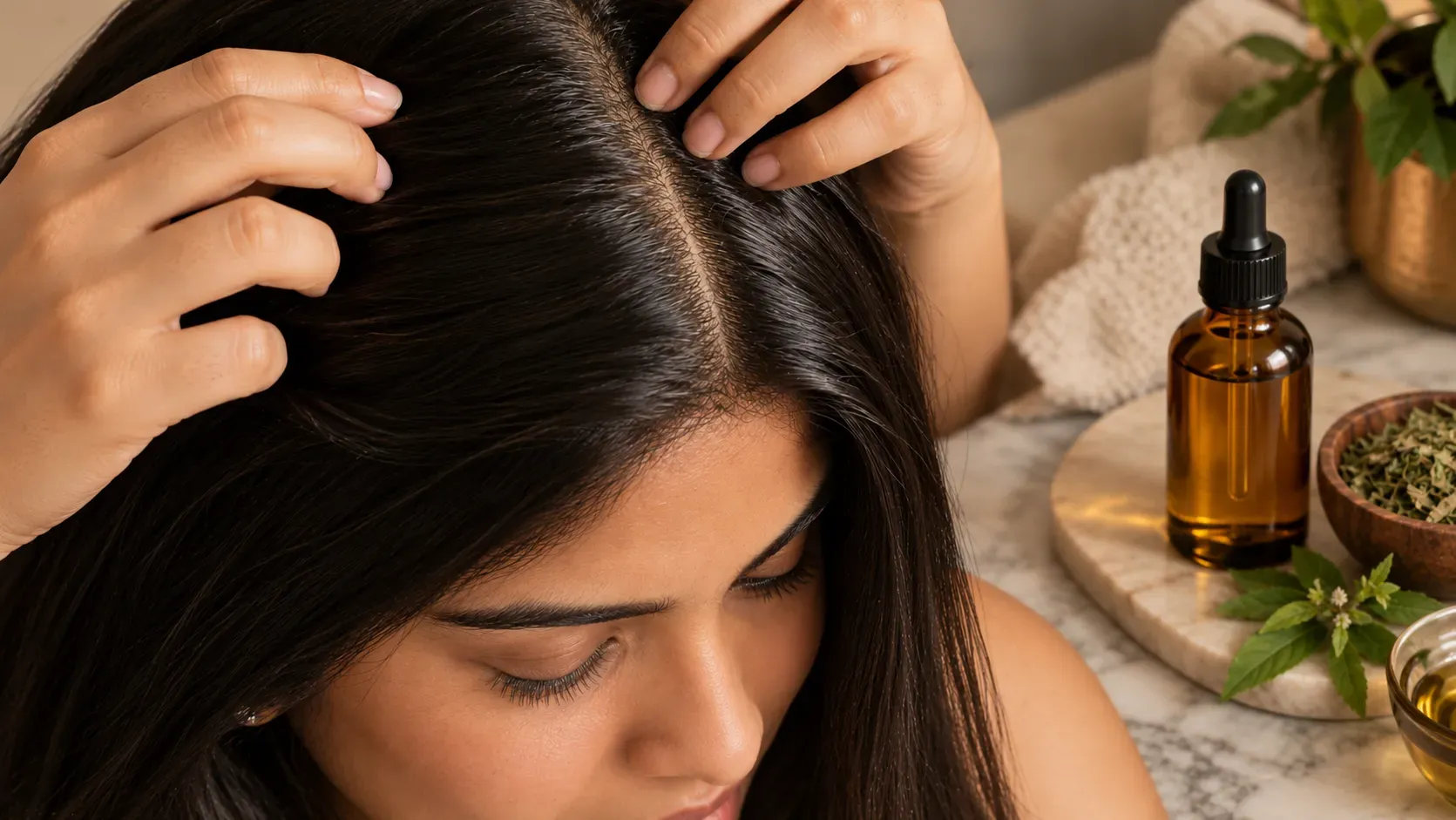
- Cooling oil therapy. Coconut oil infused with cooling herbs like bhringraj can calm Pitta-driven inflammation on the scalp. Apply it gently, without vigorous rubbing, since aggressive massage on an already irritated scalp can make things worse.
- Space out your wash days. Chemically treated hair loses moisture fast. Washing every day strips whatever protective barrier is left, so stretch it to twice a week where possible.
- Skip the next round of heat styling. Give your scalp at least six to eight weeks of a heat-free break before reaching for a straightener again.
If your scalp is in active recovery mode, a targeted, sulfate-free approach matters more than usual. Our Hair Care range is formulated without harsh detergents, which makes it a gentler option specifically for scalps recovering from chemical treatments.
Is It Ever Worth It?
That's genuinely your call to make. Some people straighten once a year and manage fine with proper aftercare. Others chase it every few months and end up dealing with chronic scalp issues that outlast the smooth hair by a long way. Either way, treat the recovery phase seriously instead of jumping straight into the next treatment the moment your roots grow out.
Smooth hair is nice. A healthy scalp underneath it matters more.
Top Posts


Popular Terms
Leave a Response
Your email address will not be published. Required fields are marked *