
Handmade Soap vs Commercial Soap: What's Actually in the Bar You're Using
Handmade Soap vs Commercial Soap: What's Actually in the Bar You're Using
You shower, apply lotion five minutes later because your skin already feels tight, and by evening it's dry again anyway. If that sounds familiar, the soap itself might be the reason, not your skin type.
Here's something most people never learn about mass-produced soap. It's not an accident that it dries you out. It's a manufacturing decision.
The Glycerin Problem Nobody Talks About
Glycerin is a natural humectant, meaning it pulls moisture into your skin and holds it there. It's actually a byproduct of traditional soap-making. And it's exactly what most commercial soap manufacturers remove.
- Glycerin gets extracted and sold separately, often for higher profit in other skincare products
- What's left is a bar that cleans effectively but offers your skin nothing back in return
- This is a major reason commercial soap tends to leave skin feeling stripped and tight
- Traditional, handmade cold-process soap retains this glycerin instead of removing it
It's not that commercial soap is "bad" exactly. It's just built for a different priority, shelf life and manufacturing efficiency, not necessarily your skin's moisture barrier.
The Ayurvedic Perspective: Over-Stripping and Vata Aggravation
In Ayurveda, dry, tight, flaky skin points toward aggravated Vata dosha. Vata governs dryness and movement in the body, and repeatedly stripping the skin's natural oils with harsh, glycerin-free soap only feeds that imbalance further.
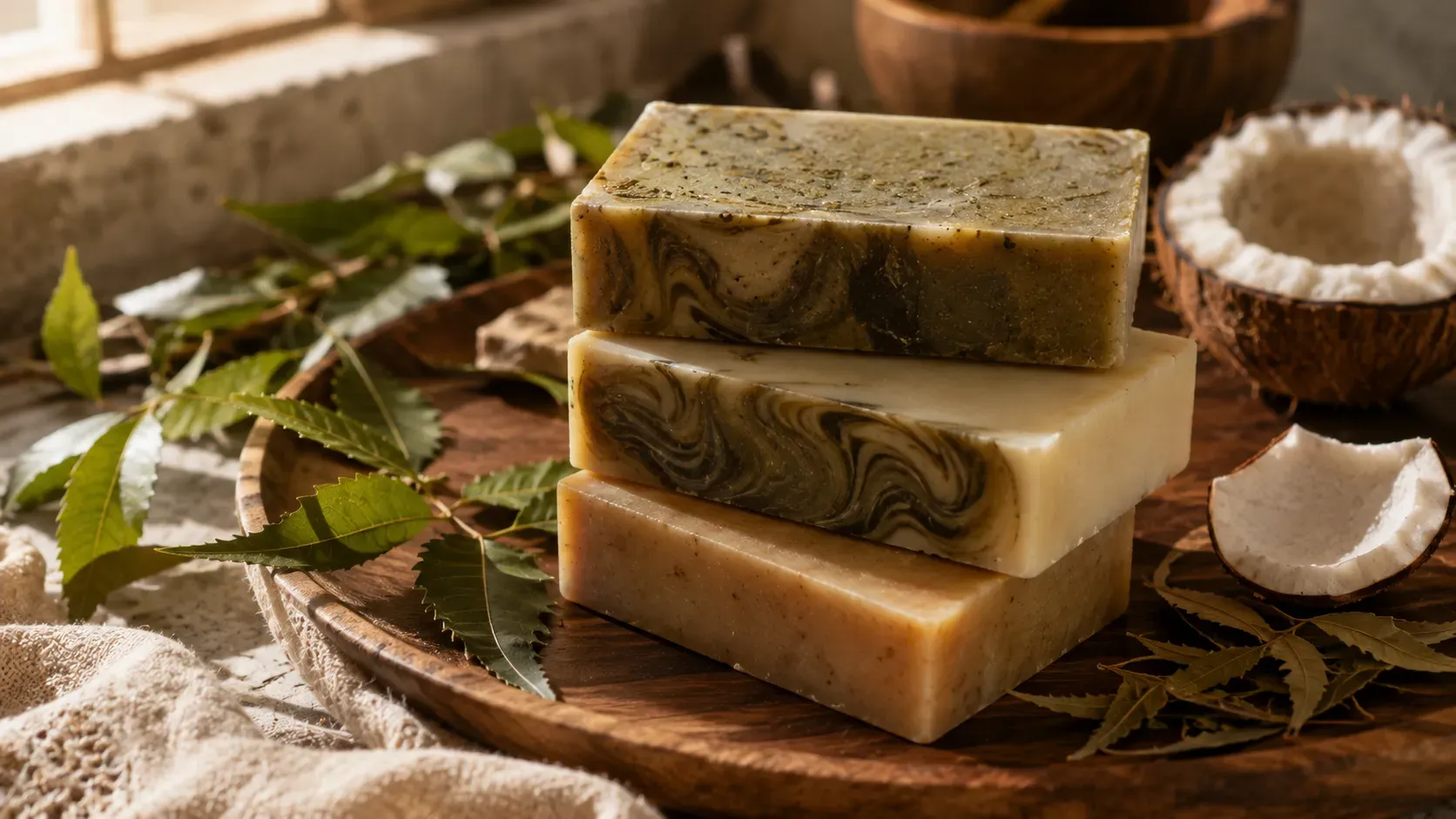
Traditional Ayurvedic soap-making has always leaned on oils like coconut, sesame, and neem specifically because they nourish while cleansing, rather than cleansing at the expense of nourishment. That's a very different philosophy from mass commercial production, even when both products are technically called "soap."
How to Tell the Difference When You're Buying
You don't need to become a chemist to shop smarter. A few quick checks go a long way.
- Check if glycerin is listed on the ingredients. If it's missing entirely, there's a good chance it was extracted out during processing.
- Look for cold-process or handmade labeling. This method typically retains more natural glycerin and skips the harsher chemical processing commercial bars go through.
- Notice how your skin feels an hour after washing, not right after. If it's tight and asking for lotion within minutes, that's your skin telling you something about the bar you just used.
Switching to a glycerin-retentive, handmade soap doesn't mean your skin transforms overnight. But most people notice less tightness and dryness within the first week or two of switching.
It's Not Just Marketing
The "natural soap" trend gets dismissed as a wellness fad sometimes, and to be fair, some of it is just packaging. But the underlying reasoning about glycerin retention is genuinely grounded in how soap chemistry works, not just branding.
Our Skin Care range includes handcrafted, cold-process soaps made with coconut and neem oils, formulated to cleanse without leaving your skin worse off than before you started.
Your skin isn't overreacting to soap in general. It might just be reacting to what's missing from the bar you've been using.
Top Posts



Popular Terms
Leave a Response
Your email address will not be published. Required fields are marked *