
Turmeric for Skin: Separating the Real Benefits From the Instagram Hype
Turmeric for Skin: Separating the Real Benefits From the Instagram Hype
Scroll through skincare content for more than a few minutes and turmeric shows up somewhere. Face masks, "golden glow" serums, DIY reels promising overnight brightness. It's everywhere, which naturally makes you wonder if it's actually doing something or if it's just a pretty, photogenic ingredient riding a trend.
The honest answer sits somewhere in between, and it's worth actually breaking down.
What Turmeric Genuinely Does for Skin
- Reduces inflammation. Curcumin, turmeric's active compound, has real, well-studied anti-inflammatory properties, which is why it calms redness and irritated skin fairly reliably.
- Has antibacterial properties. This makes it genuinely useful for acne-prone skin, helping reduce the bacteria that contribute to breakouts.
- Supports a more even skin tone over time. With consistent use, it can help fade the look of dark spots and dullness, though this happens gradually, not overnight.
What Turmeric Doesn't Do (No Matter What the Reel Claims)
- It won't dramatically "brighten" your skin tone in one use, despite what a lot of viral videos suggest
- It doesn't replace sunscreen or treat deep pigmentation on its own
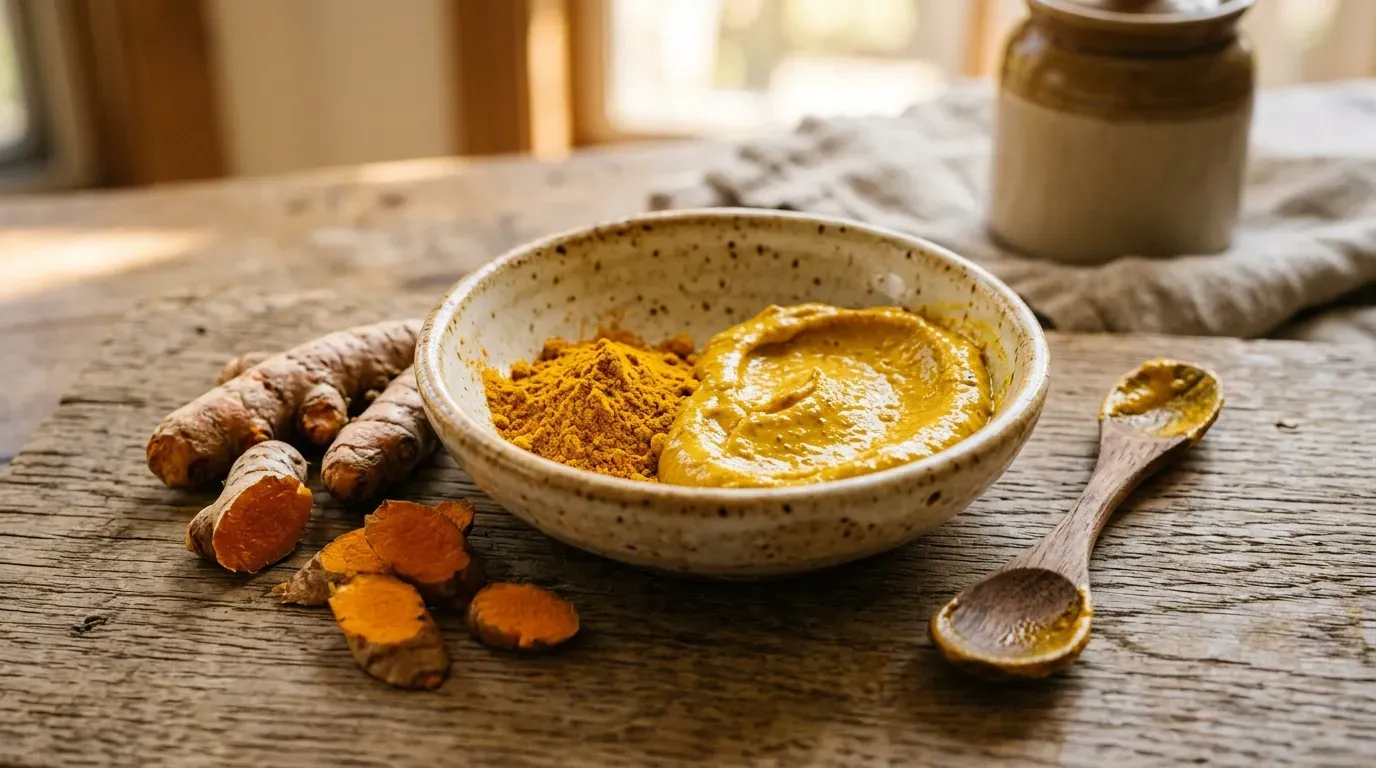
- Raw turmeric applied incorrectly can stain skin yellow for days, which isn't a benefit, just an inconvenience
Most of the disappointment people feel with turmeric comes down to expecting instant results from something that works gradually and gently, not dramatically.
The Ayurvedic Perspective: Why Turmeric Has Lasted This Long
Ayurveda has used turmeric, or Haridra, for centuries specifically for its ability to pacify Pitta dosha, the dosha associated with heat and inflammation. This lines up closely with what modern research now confirms about curcumin's anti-inflammatory action. It's a rare case where a traditional remedy and a modern lab study arrive at almost the exact same conclusion, just using different language to describe it.
How to Actually Use Turmeric on Your Skin
- Never apply it raw and undiluted. Straight turmeric powder can irritate sensitive skin and stain badly. Mix it with a base like yogurt or besan.
- Use it two to three times a week, not daily. Overuse doesn't speed up results, it just increases the risk of irritation or staining.
- Pair it with sun protection. Turmeric supports even tone, but without sunscreen, new pigmentation forms just as fast as old spots fade.
If measuring turmeric powder and worrying about stains sounds like more effort than it's worth, a properly formulated product solves that problem. Our best fairness cream uses turmeric in a stable, skin-safe concentration, so you get the real anti-inflammatory and brightening benefit without the guesswork or the yellow stains.
Hype Aside, It Earns Its Reputation
Turmeric isn't magic, and it won't transform your skin overnight the way a 15-second reel might suggest. But it's also not just hype. Used consistently and correctly, it's one of the few trending ingredients that actually has centuries of use and real scientific backing standing behind it.
Sometimes the ingredient earning all the attention actually deserves some of it.
Top Posts
Popular Terms
Leave a Response
Your email address will not be published. Required fields are marked *