
Patchy Beard? Here's What's Actually Causing the Gaps
Patchy Beard? Here's What's Actually Causing the Gaps
You've been growing it out for six weeks now, hoping the patches near your cheeks would fill in on their own. They haven't. Meanwhile the mustache and chin area look fine, almost thick even, which makes the bare spots stand out even more. It's a strange kind of frustrating, watching part of your face grow a beard while another part just sits there.
Patchiness is one of the most common beard complaints out there, and it's rarely as simple as "you just can't grow a beard."
What's Actually Causing the Patches
- Genetics. Follicle density on your cheeks is largely inherited, and some men simply have fewer active follicles in specific zones.
- Age. Beard growth often keeps maturing into your late twenties. A patchy beard at 22 can look noticeably fuller by 27, purely from natural follicle maturation.
- Poor circulation to the follicle. Even where follicles exist, weak blood flow to the area can mean thinner, slower growth than elsewhere on your face.
- Nutrient gaps. Low biotin, zinc, or protein intake can affect hair growth across your whole body, beard included.
Most men assume patchiness means "no follicles there at all," but it's often more about weak or dormant follicles than a complete absence of them.
The Ayurvedic Perspective: Weak Root Nourishment
Ayurveda would describe patchy areas as spots where Rakta dhatu, the tissue governing blood and nourishment, isn't reaching the hair root efficiently. Combined with a Kapha-Vata imbalance affecting the skin's ability to support strong follicle activity, these regions end up with weaker, sparser growth compared to zones with better circulation and nourishment. This is part of why consistent scalp and beard massage has traditionally been recommended, not as a magic patch-filler, but as a way to genuinely improve blood flow to underperforming follicles.
What Actually Helps
- Give it real time before judging. Four to six weeks isn't enough to evaluate patchiness properly. Most beards need at least three to four months of uninterrupted growth to show their true pattern.
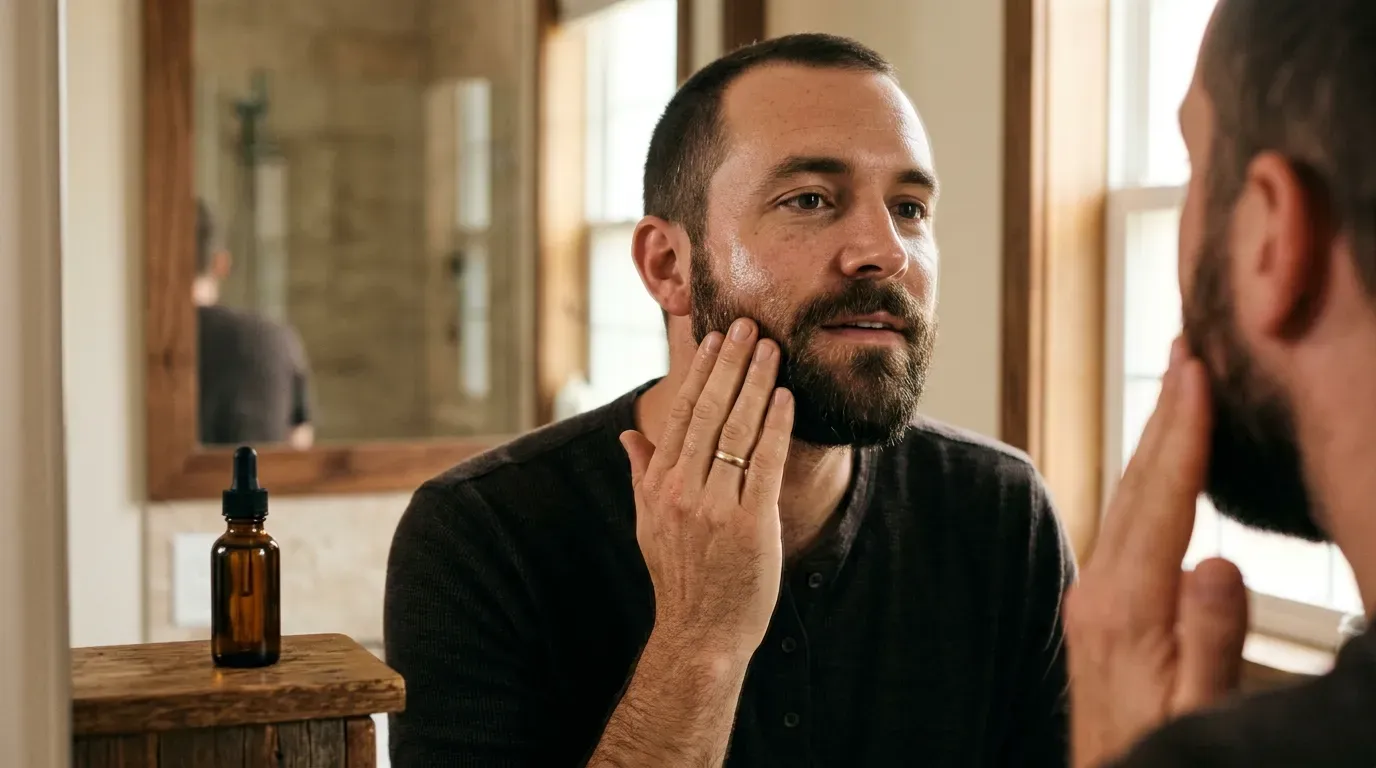
- Massage patchy areas daily with warmed oil. Two to three minutes of gentle massage improves circulation to weaker follicles specifically in those zones, which can genuinely support denser growth over time.
- Check your protein and biotin intake. If your diet is low in either, your body may simply not have the raw material to support fuller growth, no matter what you apply externally.
Our Beard Care range includes oils formulated to support circulation and follicle nourishment specifically in slower-growing areas, which pairs well with the daily massage habit rather than replacing it.
What Patchiness Doesn't Mean
A patchy beard at 23 doesn't necessarily mean a patchy beard forever. Genetics sets a ceiling, sure, but a lot of men are still nowhere close to that ceiling when they give up early. Combine patience, consistent care, and a decent diet, and most patchy beards do fill in more than expected, even if a completely uniform beard was never realistic to begin with.
Some patchiness might just be part of your beard's character. But give it a genuine chance before deciding that's the final verdict.
Top Posts



Popular Terms
Leave a Response
Your email address will not be published. Required fields are marked *