
Your Diet Is Part of Your Skincare Routine Now, Not Just a Nice-to-Have
Your Diet Is Part of Your Skincare Routine Now, Not Just a Nice-to-Have
You've got a solid routine. Cleanser, serum, moisturizer, sunscreen, all the right actives for your skin type. And yet, some weeks your skin just looks a little duller, a little more reactive, a little less like it's actually responding to any of it. There's a decent chance the missing piece isn't on your bathroom shelf at all.
Why Skincare Alone Has a Ceiling
Topical products can only do so much. They work on the outermost layers of skin. What's happening inside your body, inflammation, nutrient levels, gut health, shapes how your skin behaves at a level no serum can fully override.
- Facialists are increasingly recommending dietary and supplement support alongside topical skincare, recognizing a real connection between nutrition and long-term skin health
- Chronic inflammation from diet (excess sugar, processed food, poor gut health) shows up on skin as dullness, breakouts, and premature fine lines
- Nutrient deficiencies, particularly in omega-3s, zinc, and antioxidants, directly affect how well skin repairs and retains moisture
- No topical product can fully compensate for a diet that's consistently working against your skin's repair processes
This isn't a claim that food replaces skincare. It's that both are working on the same system from different directions, and ignoring one limits what the other can achieve.
The Ayurvedic Perspective: Skin Reflects Digestion
Ayurveda has always treated skin as a direct reflection of internal digestive health, specifically the strength of Agni, your digestive fire. Poor digestion, according to this framework, leads to the accumulation of toxins (Ama) that eventually show up on the skin as dullness, breakouts, or inflammation.
This is essentially the same idea modern nutrition science is now describing through inflammation and gut health, just using a different vocabulary. Ayurveda never separated "what you eat" from "how your skin looks." Modern skincare is only now catching back up to that connection.
What Actually Helps, Without Overcomplicating It
You don't need a complicated supplement stack. A few consistent dietary habits do most of the work.
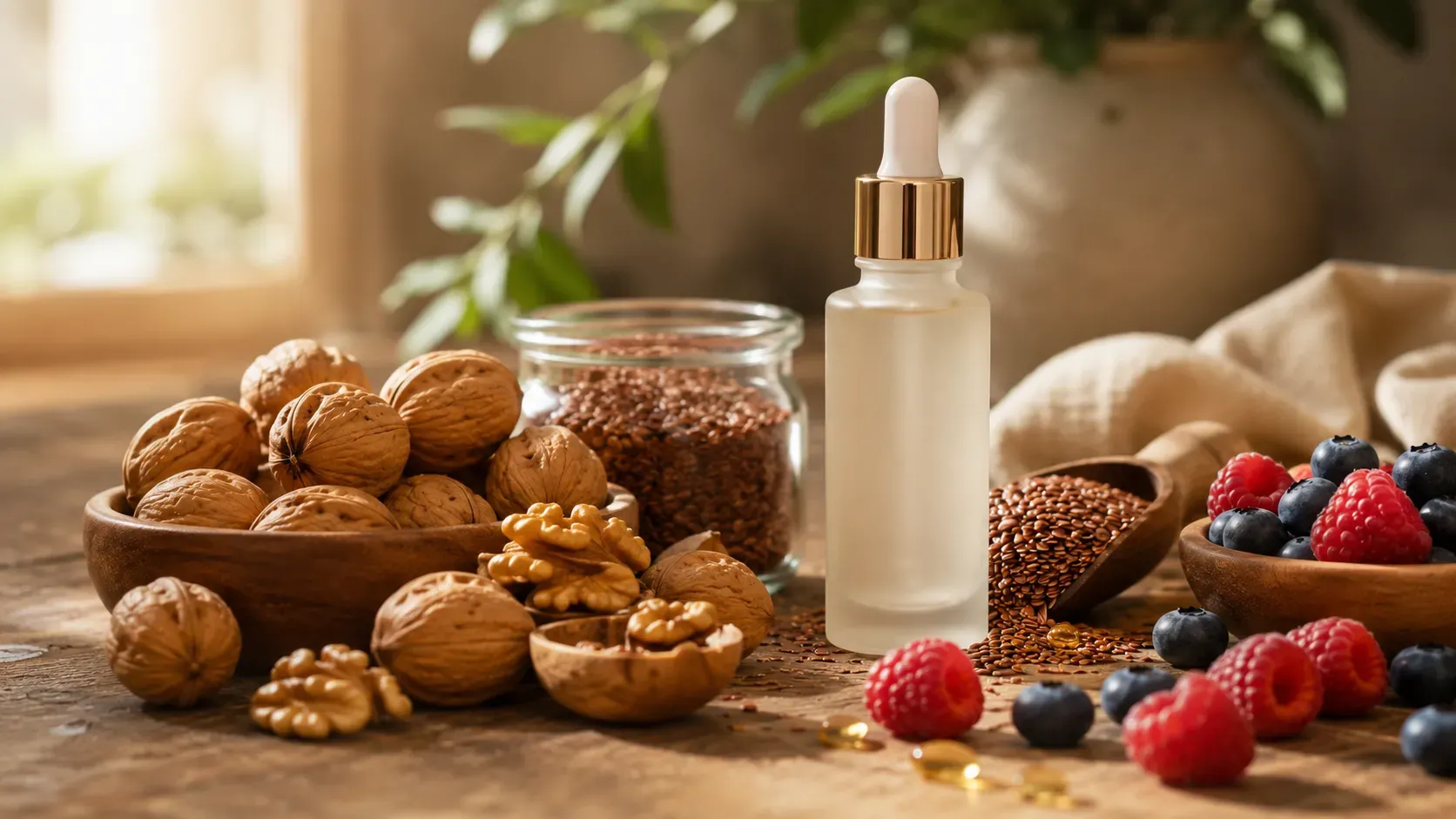
- Prioritize omega-3 rich foods. Walnuts, flaxseeds, and fatty fish support the skin barrier from the inside, complementing what your moisturizer is doing on the surface.
- Reduce processed sugar where you reasonably can. High sugar intake is linked to glycation, a process that breaks down collagen and accelerates visible aging over time.
- Support your gut with fiber and fermented foods. A healthier gut is increasingly linked to calmer, less reactive, less inflamed skin.
Give dietary changes real time, usually six to eight weeks, before expecting visible skin changes. This is a slower lever than a topical product, but a more foundational one.
Our Skin Care range is built with this internal-external connection in mind, formulated to work alongside a balanced diet rather than trying to compensate for one that isn't.
Your serum can only do its job so well if what's happening inside is working against it. Sometimes the missing step in your routine isn't a product at all.
Top Posts



Popular Terms
Leave a Response
Your email address will not be published. Required fields are marked *