
Biotin for Hair Growth: Do the Supplements Actually Work?
Biotin for Hair Growth: Do the Supplements Actually Work?
Walk into any pharmacy or scroll through any online store, and biotin is stacked front and center. Gummies, tablets, "hair, skin and nails" blends, all promising longer, thicker hair. It's one of the most popular hair supplements in India, and one of the most misunderstood.
So does it actually work, or is it just a very well-marketed vitamin?
What Biotin Actually Does
Biotin, also called vitamin B7, helps your body turn food into energy and plays a role in producing keratin, the protein that makes up your hair. That connection is why it became the poster child for hair growth. The logic sounds airtight: hair needs keratin, biotin supports keratin, so more biotin should mean more hair.
The reality is less exciting. Your body needs only a small amount of biotin, and most people get enough from a normal diet.
Who Actually Benefits From Biotin
- People with a genuine deficiency. This is where biotin clearly works. Deficiency can cause hair thinning, brittle nails, and skin rashes, and correcting it often reverses those symptoms.
- People with certain medical conditions or on specific long-term medications. Some of these can lower biotin levels, but this is something a doctor should confirm, not something to guess at.
- Some pregnant or breastfeeding women. Needs go up slightly, though a balanced diet usually covers it.
Who Probably Won't See Much
If your biotin levels are already normal, taking extra is unlikely to speed up growth or thicken your hair. Your body doesn't store excess biotin for later use. It simply clears it out. Most of the strong claims online come from studies on people who were deficient, which is a very different group from someone with ordinary hair fall.
One Important Safety Note
High-dose biotin supplements can interfere with certain blood tests, including thyroid and heart-related tests, sometimes giving falsely high or low results. If you take biotin regularly, tell your doctor and your lab before any blood work. It's a small step that can prevent a misleading result.
The Ayurvedic Perspective: Nourish the Tissue, Not Just the Nutrient
Ayurveda doesn't isolate a single vitamin. It looks at how well your body digests food and builds tissue, a process tied to Agni, your digestive fire, and the nourishment of Asthi dhatu, the tissue linked to bones, nails, and hair. If digestion is weak, even a nutrient-rich diet may not reach the hair root properly. That's why traditional advice focuses on easily digestible, nourishing foods and consistent scalp care rather than one concentrated supplement.
What to Do Instead of Reaching for a Supplement
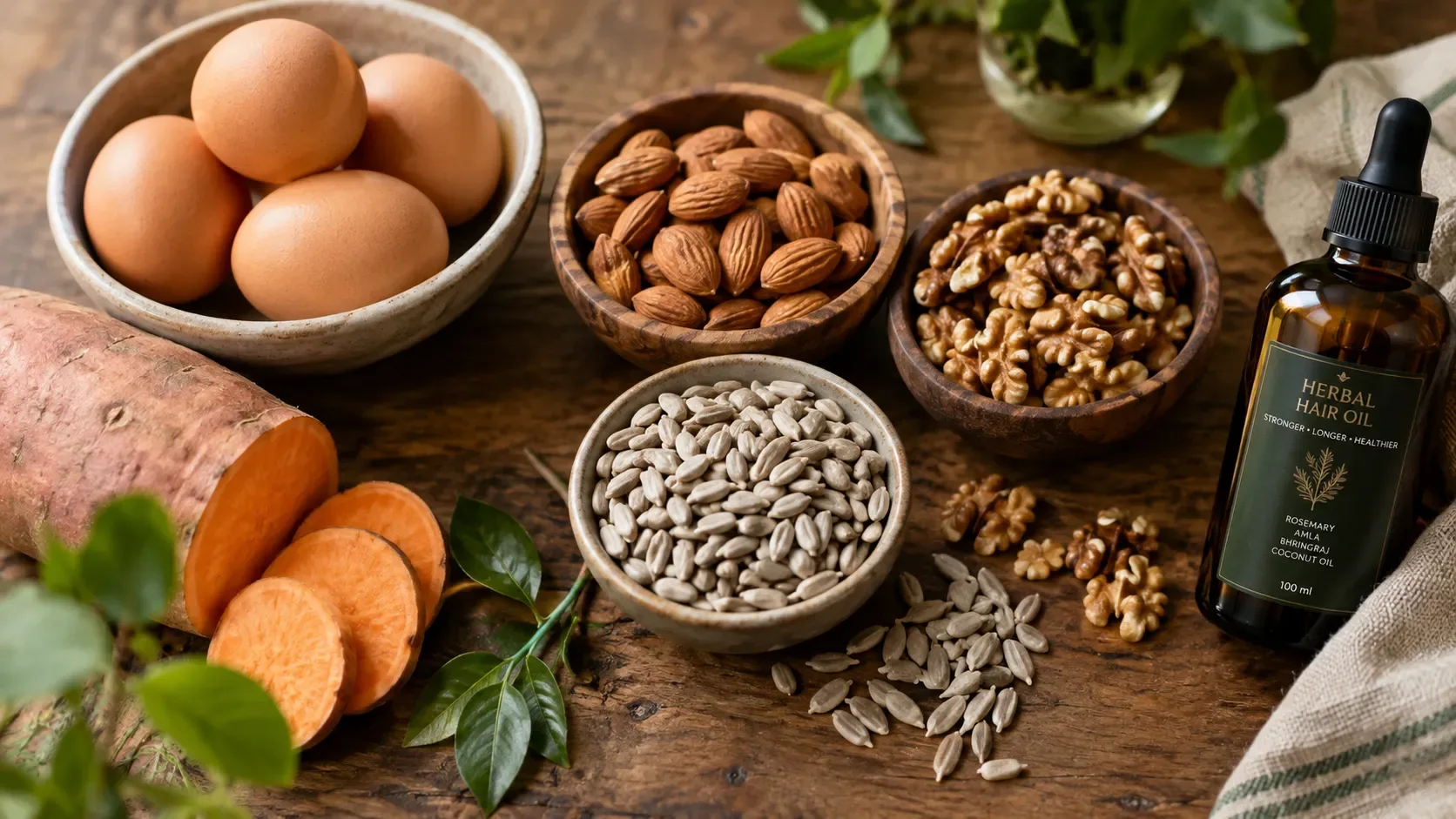
- Eat biotin-rich foods. Eggs, almonds, walnuts, sunflower seeds, sweet potato, and legumes all contribute.
- Check your iron, vitamin D, and protein intake. These are far more common causes of hair fall in India than low biotin.
- Support the scalp directly. A weekly warm oil massage improves circulation to the follicle, which no capsule can do.
Our Hair Care range includes herbal oils built around amla and bhringraj, designed to nourish the scalp where hair actually grows, which pairs well with a balanced diet.
The Honest Verdict
Biotin works when you're low on it and does very little when you're not. Before spending on supplements, get a simple blood test, fix the basics in your diet, and look after your scalp. If hair fall continues, the cause is probably something other than biotin.
Top Posts


Popular Terms
Leave a Response
Your email address will not be published. Required fields are marked *