
Amla, Turmeric & Ashwagandha: The Ayurvedic Ingredients Science Is Finally Catching Up To
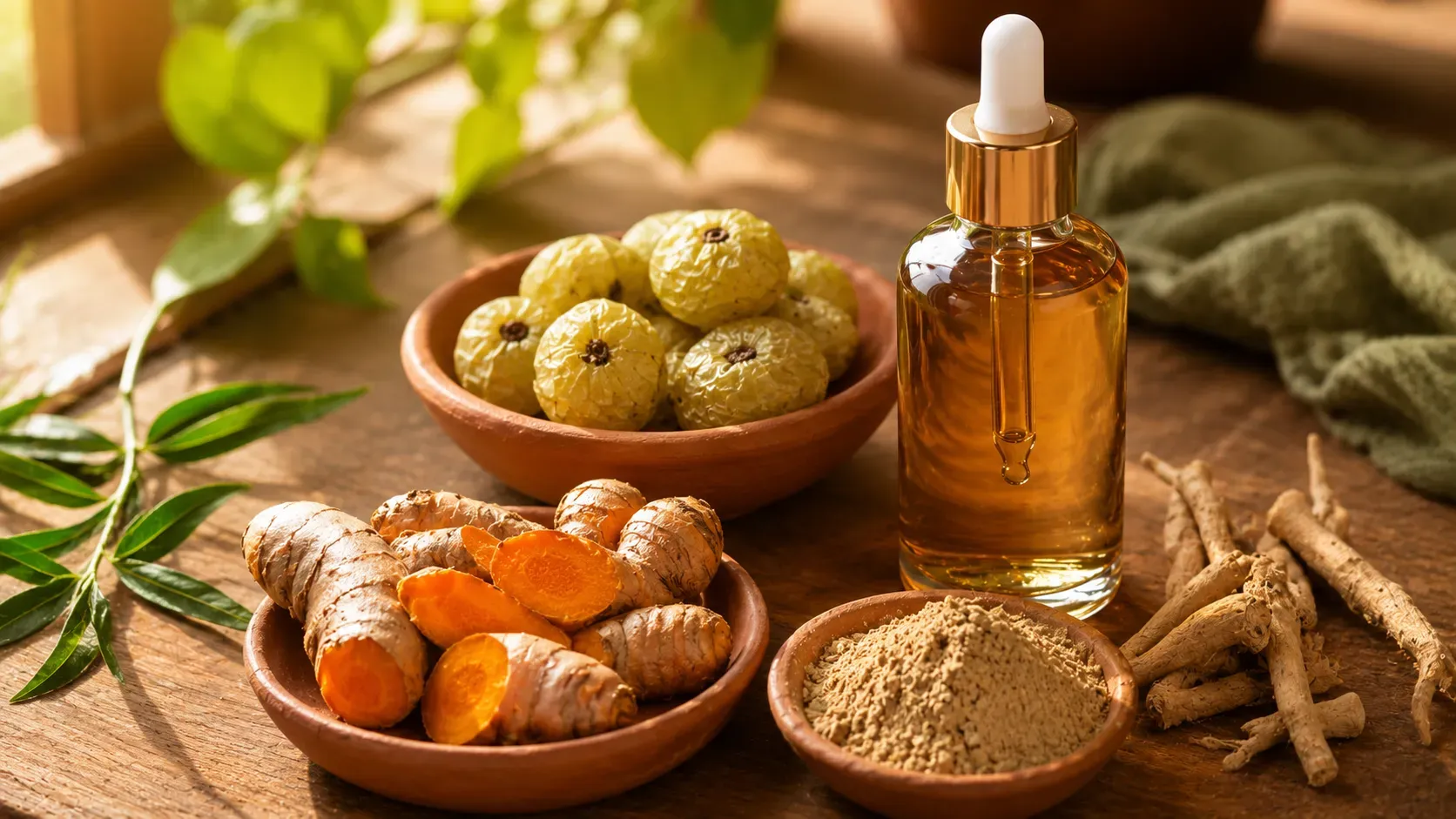
Amla, Turmeric & Ashwagandha: The Ayurvedic Ingredients Science Is Finally Catching Up To
Your grandmother probably rubbed turmeric on your face before a wedding. You probably rolled your eyes. Turns out she was onto something the skincare industry is only now taking seriously.
For years, "natural" skincare got dismissed as folklore, the kind of thing you do out of tradition rather than evidence. That's changing fast. Amla, turmeric, and ashwagandha are being studied and formulated the same way brands treat niacinamide or hyaluronic acid: as clinical actives with a specific job to do, not just pleasant-smelling extras.
What Each Ingredient Actually Does
Not all "natural" ingredients work the same way, and lumping them together is part of why Ayurveda gets dismissed. Here's what the research points to for each one.
- Amla (Indian gooseberry): One of the richest natural sources of vitamin C, which supports collagen production and helps fade dark spots. Unlike synthetic vitamin C, it's more stable and less likely to irritate sensitive skin.
- Turmeric (curcumin): Its anti-inflammatory properties calm redness and irritation, while its brightening effect helps even out patchy, uneven skin tone, especially post-acne marks.
- Ashwagandha: An adaptogen that helps skin cope with stress-induced damage. It supports the skin barrier and has shown early promise in slowing signs of premature aging linked to cortisol spikes.
None of these work overnight. That's actually a good sign. Ingredients that promise instant results are usually doing something harsher to your skin than you'd like.
The Ayurvedic Perspective: Pitta Imbalance and Skin
In Ayurveda, most of the concerns these ingredients target trace back to aggravated Pitta dosha. Pitta governs heat, inflammation, and metabolism in the body. When it's out of balance, you'll see it as redness, breakouts, pigmentation, or a face that just feels "hot" and reactive.
Turmeric and amla are traditionally used to pacify Pitta specifically because of their cooling, anti-inflammatory nature. This isn't a coincidence that modern science happened to confirm. It's the same logic working from two different directions, one rooted in centuries of observation, the other in a lab.
Why This Matters for What You Buy
Here's the catch. Not every product with "turmeric" printed on the label actually contains enough of it to do anything. A lot of brands add a trace amount for the marketing appeal, not the efficacy.
Look for products that list these actives higher up in the ingredient list, and ideally state a concentration or extraction method. Cold-pressed, standardized extracts hold onto more of the active compound than a diluted, mass-produced version.
Two Things You Can Do This Week
- Patch test before committing. Even natural actives can cause reactions, especially concentrated turmeric. Apply a small amount behind your ear for two days before using it on your face.
- Pair, don't stack randomly. Amla (vitamin C) works well in the morning under sunscreen. Turmeric and ashwagandha-based products are better suited to a calming night routine. Using everything at once usually does more harm than good.
Skin that's dealing with pigmentation, redness, or that constant tired-looking dullness doesn't need a ten-product routine. It needs the right actives, used consistently.
Our Skin Care range is built around exactly this idea, standardized Ayurvedic actives at concentrations that actually do something, without unnecessary filler ingredients diluting the formula.
Your grandmother's kitchen shelf and a dermatologist's ingredient list are starting to agree with each other. Might be worth listening to both.
Top Posts
Popular Terms
Leave a Response
Your email address will not be published. Required fields are marked *