
Can Stress Really Cause Hair Loss? What Ayurveda and Modern Science Agree On
Can Stress Really Cause Hair Loss? What Ayurveda and Modern Science Agree On
A rough few months at work. A family situation that wouldn't let up. Exams, a breakup, a move to a new city, whatever the source, you've been running on stress for a while now. And somewhere in the middle of it, you noticed your hair thinning in a way it never did before.
You're not imagining a connection. It's real, and there's a name for it.
What Stress Actually Does to Your Hair
Modern medicine has a term for this called telogen effluvium. Under prolonged stress, a larger than normal number of hair follicles get pushed into the "resting" phase of their growth cycle at the same time. A few months later, that resting hair sheds, sometimes in noticeably larger amounts than usual. The stressful event and the hair fall can be separated by two or three months, which is exactly why people are often confused about what triggered it.
- Diffuse thinning across the scalp rather than one bald patch
- Increased shedding that seems to come out of nowhere
- Hair that feels finer or more fragile overall
The Ayurvedic Perspective: Vata Gets Aggravated by Mental Strain
Ayurveda has long linked mental and emotional strain to Vata dosha, which governs the nervous system alongside movement and dryness in the body. Chronic stress is considered a major Vata aggravator. And an aggravated Vata doesn't stay contained to your mind. It shows up physically too, often at the hair root, where it disrupts the nourishment cycle that keeps hair anchored and growing.
What's interesting is how closely this lines up with the modern explanation. Both traditions point to the same basic idea: your body diverts resources away from "non-essential" functions like hair growth when it's under sustained pressure, and hair pays the price a little later.
What Actually Helps
- Prioritize sleep over everything else during stressful periods. This sounds obvious, but it's usually the first thing people sacrifice, and it's the thing your hair cycle needs most.
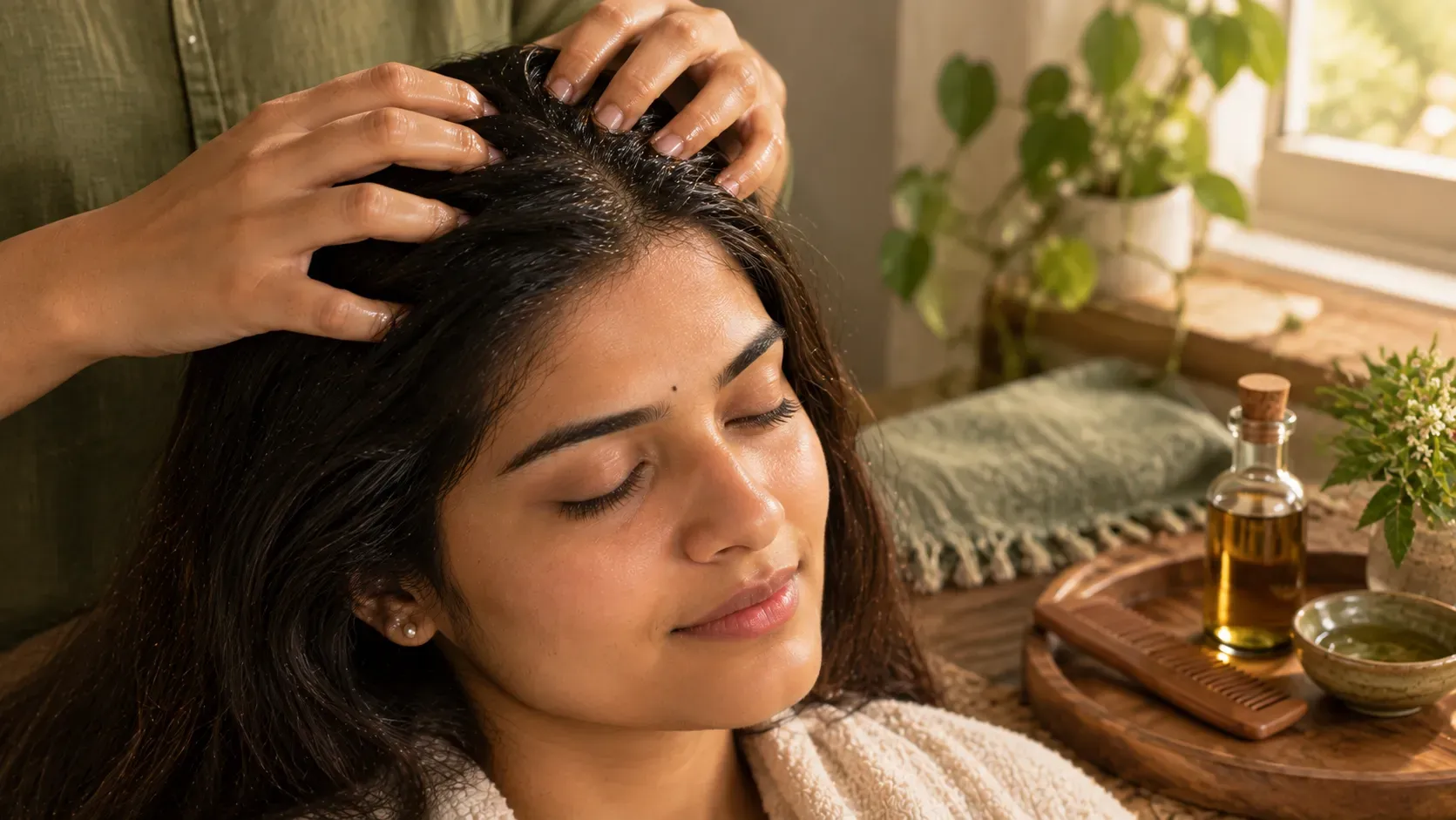
- Grounding scalp massage with Vata-balancing oils. Warm oil massage doesn't just help the scalp directly, it also activates the parasympathetic nervous system, which counters the stress response itself.
- Simple breathing practice, even five minutes. Slow, deep breathing lowers cortisol levels over time, and cortisol is directly tied to how many follicles get pushed into that resting phase.
During recovery, your scalp benefits from consistent, gentle nourishment rather than aggressive treatments. Our Hair Care range includes Vata-pacifying formulations designed for exactly this kind of restorative phase, when your hair needs support more than intervention.
The Good News
Stress-related hair loss is usually temporary. Once the stressful period passes and the nervous system settles, most people see their hair cycle normalize within a few months. It rarely means something has gone permanently wrong. It just means your body was busy dealing with something else for a while, and your hair noticed.
Be patient with it. It's catching up, not giving up.
Top Posts



Popular Terms
Leave a Response
Your email address will not be published. Required fields are marked *