
Natural vs Chemical Exfoliants: Which One Actually Suits Indian Skin
Natural vs Chemical Exfoliants: Which One Actually Suits Indian Skin
Scrubs used to be the default. Then chemical exfoliants took over every skincare conversation, and suddenly physical scrubs got labeled outdated, even harmful. The truth is more nuanced than either camp usually admits, especially for Indian skin, which tends to be more melanin-rich and, in many climates, more prone to both oiliness and sun-triggered pigmentation.
What Natural Exfoliants Actually Do
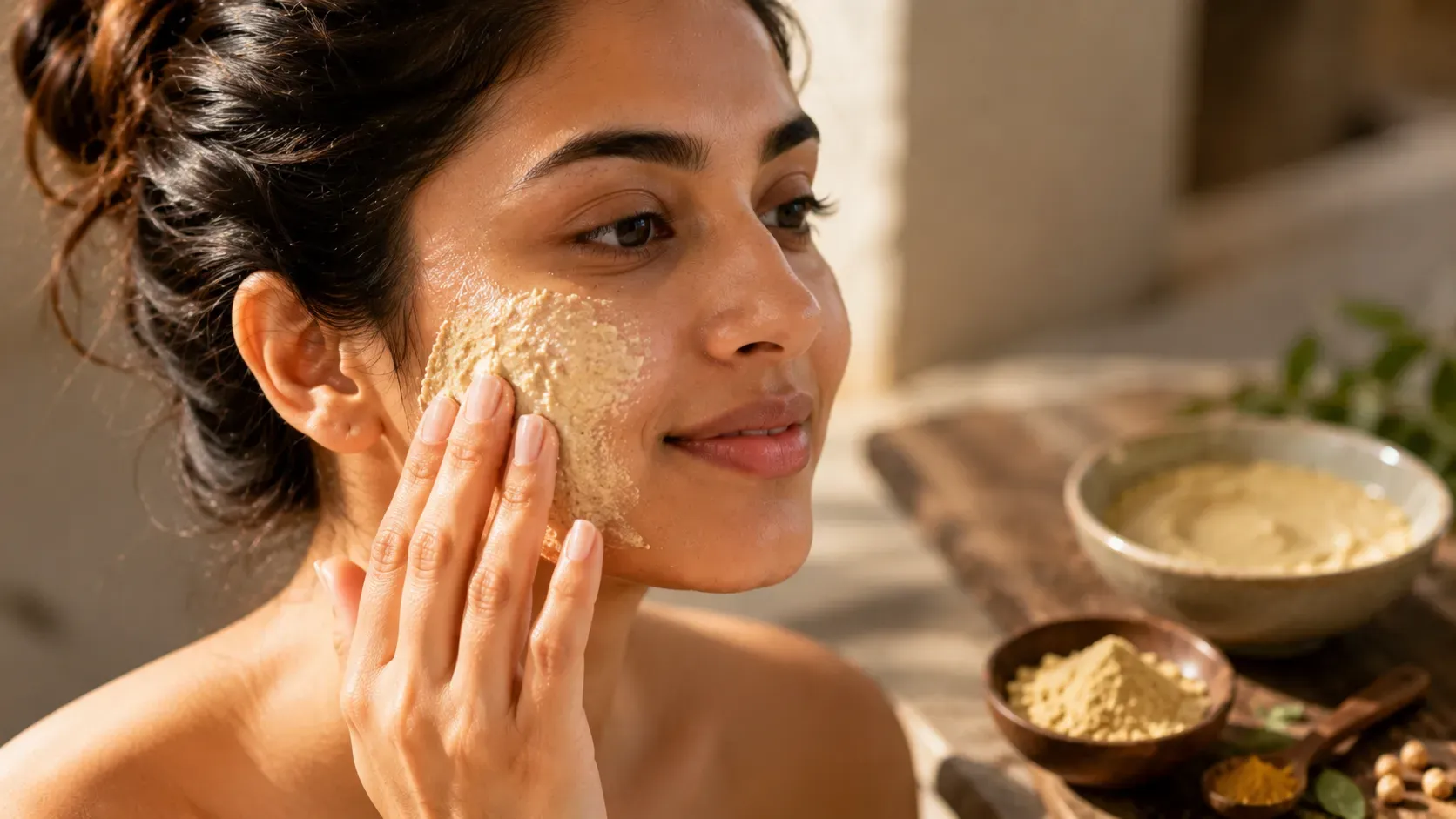
Natural or physical exfoliants use granular texture, ground rice, oats, sugar, walnut shell, to manually slough off dead skin cells through friction. Done gently, this improves texture and removes surface buildup fairly immediately, with visible results right after use.
The risk is real, though. Overly harsh scrubs, or ones with sharp, uneven granules, can create micro-tears in the skin, which is a particular concern for Indian skin tones, since any resulting irritation frequently triggers post-inflammatory pigmentation. That dark mark left behind after a rough scrub often lasts far longer than the original congestion it was meant to fix.
What Chemical Exfoliants Actually Do
Chemical exfoliants, AHAs like glycolic and lactic acid, or BHAs like salicylic acid, work differently. Rather than physical friction, they dissolve the bonds holding dead skin cells together, allowing them to shed more evenly without manual scrubbing.
This tends to be gentler on the skin barrier overall, and BHAs specifically penetrate into oily, congested pores better than any physical scrub can reach. For Indian skin dealing with pigmentation concerns, chemical exfoliants, particularly with ingredients like mandelic acid, are often gentler while still effectively addressing melanin-related unevenness.
The Ayurvedic Perspective: Gentle Consistency Over Intensity
Ayurveda has long used natural exfoliating ingredients like besan, gram flour, and finely ground herbs, applied gently rather than scrubbed harshly. The traditional emphasis was always on gradual, consistent care rather than aggressive, immediate results, a philosophy that actually supports the more measured, gentler approach chemical exfoliants also encourage when used correctly.
The concern Ayurveda would raise with either method is intensity. Whether it's a rough physical scrub or an overly strong acid percentage, aggravating Pitta, and the resulting inflammation, is the real risk for Indian skin specifically, given how visibly that inflammation tends to show up as pigmentation afterward.
Which One Actually Suits You
- Oily, congested, acne-prone skin: BHA-based chemical exfoliants, particularly salicylic acid, tend to work better here, reaching into pores that physical scrubs can't properly clear.
- Dry, sensitive skin: A gentle natural exfoliant, used sparingly, once a week at most, with soft ingredients like fine oat powder, tends to be less irritating than stronger chemical formulas.
- Skin with existing pigmentation concerns: Chemical exfoliants, specifically mandelic or lactic acid, are generally safer, since they're less likely to trigger the friction-based irritation that worsens pigmentation.
- Normal, balanced skin: Either can work well. A gentle natural scrub once a week alongside a mild chemical exfoliant a few times a week covers both texture and tone concerns.
Three Rules That Apply Either Way
- Never exfoliate daily, regardless of method. Two to three times a week is plenty for most skin types, and overdoing it damages the barrier faster than either method alone would.
- Always follow with sunscreen the next morning. Both methods increase sun sensitivity temporarily, and skipping sunscreen afterward risks undoing any benefit with fresh pigmentation.
- Patch test new chemical exfoliants, especially higher-percentage formulas, before applying to your full face.
There's No Universal Winner
Neither method is objectively superior, despite what trending content often implies. The right choice depends on your specific skin concern, sensitivity level, and how consistently you're willing to use it. For Indian skin specifically, gentleness matters more than intensity, given how visibly irritation tends to show up as lingering pigmentation.
Explore our Skin Care collection for exfoliating options gentle enough for regular, sustainable use.
Top Posts


Popular Terms
Leave a Response
Your email address will not be published. Required fields are marked *