
Hard Water and Hair Fall: The Connection Most People Miss
Hard Water and Hair Fall: The Connection Most People Miss
You've switched shampoos three times. Tried oiling more. Cut back on heat styling. And your hair still feels rough, falls more than it should, and just won't cooperate. Before buying another product, it's worth asking a question most people skip entirely: what's actually in the water you're washing with?
In many Indian cities, the answer is hard water, and it might be undoing everything else you're trying to do.
What Hard Water Actually Does
Hard water contains a higher concentration of dissolved minerals, mainly calcium and magnesium. When this water repeatedly comes into contact with your hair, these minerals build up on the hair shaft and scalp over time, leaving a residue that ordinary shampoo doesn't fully remove.
This mineral buildup makes hair feel rough, look dull, and become more prone to breakage, since the cuticle layer can't lie smooth under a coating of deposited minerals. It also clogs scalp pores gradually, which can weaken follicles and contribute to increased shedding over months of exposure.
Signs Hard Water Might Be the Culprit
- Hair feels rough or straw-like almost immediately after washing, even with a good conditioner
- Shampoo doesn't lather well, no matter how much product you use
- Increased breakage and split ends despite minimal heat styling or chemical treatment
- A visible, sometimes chalky residue on your scalp or hairline after washing
- Hair fall that improved noticeably during trips to a different city or while using bottled or filtered water
The Ayurvedic Perspective: External Aggravation of Root Balance
While hard water isn't a concept discussed in classical Ayurvedic texts, the framework still applies usefully here. Continuous exposure to mineral-laden water is a form of external Vata aggravation, drying and roughening hair over time, compounded by the way mineral buildup blocks proper absorption of oils and nutrients into the scalp.
This is why oiling routines sometimes feel less effective for people in hard water areas. The oil simply can't penetrate as well through a layer of mineral residue sitting on the scalp and hair shaft.
What You Can Actually Do About It
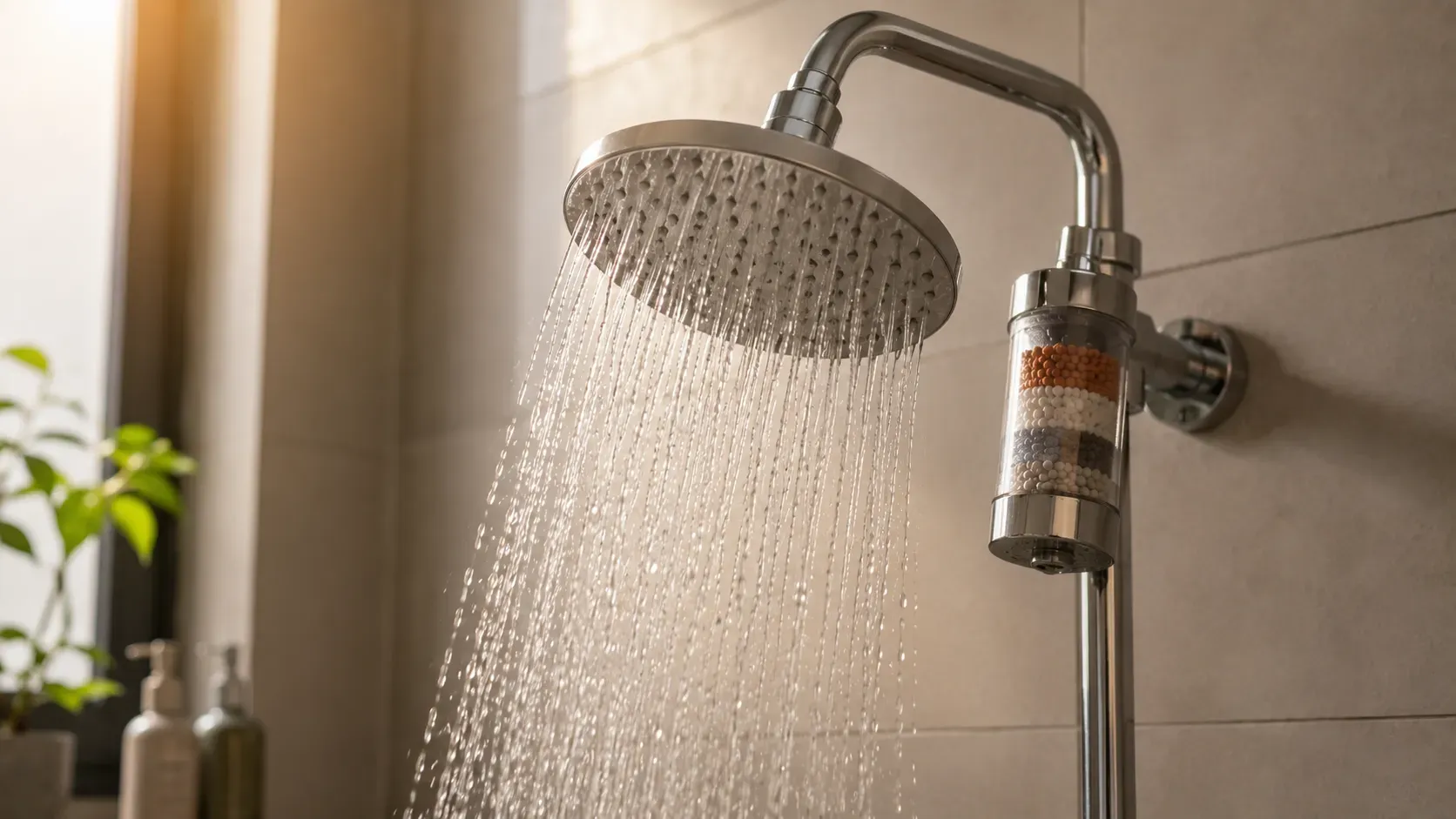
- Install a shower filter. A basic inline shower filter reduces mineral content significantly and is one of the most effective long-term fixes available. It's a one-time investment that keeps paying off with every wash.
- Use a clarifying shampoo occasionally. Once every two weeks, a clarifying or chelating shampoo helps strip built-up mineral deposits that regular shampoo leaves behind.
- Try a final rinse with diluted apple cider vinegar. A tablespoon in a mug of water, used as a final rinse after conditioner, helps dissolve mineral residue and restore shine. Rinse thoroughly afterward.
Don't Skip the Basics
Even with hard water, a consistent oiling routine and a nourishing, sulfate-free shampoo still matter. They won't undo the mineral exposure entirely, but they support the hair's resilience against the damage hard water causes, which makes a real difference over time.
It's Not Always the Product
If you've tried multiple products with no real change, it's worth testing this theory before buying yet another shampoo. Even a two-week trip somewhere with softer water, or switching to filtered water for washing, tells you a lot about whether this has been the missing piece all along.
Explore our Hair Care collection for oils and treatments formulated to support hair resilience, even in tough water conditions.
Top Posts


Popular Terms
Leave a Response
Your email address will not be published. Required fields are marked *