
Why Your Hair Falls More in Winter (And What Actually Helps)
Why Your Hair Falls More in Winter (And What Actually Helps)
You pull your hairbrush through and there it is again. A little more hair than last month, tangled around the bristles. Maybe you've spotted extra strands on your pillow too, or in the shower drain after washing. If this happens to you every year around October or November, you're not losing your mind, and you're definitely not alone.
Winter hair fall is a real, well documented pattern. It's not just "in your head." It's in your scalp.
Signs You're Dealing With Seasonal Hair Fall
- More strands than usual on your pillow or hairbrush
- A scalp that feels tight, flaky, or itchy
- Hair that snaps easily near the roots
- Static and frizz that wasn't there in summer
None of this means something is deeply wrong with you. It usually means your scalp environment has changed, and your hair is reacting to it.
What's Actually Happening to Your Scalp in Winter
Cold air holds less moisture than warm air. Add heaters, hot showers, and dry indoor spaces, and your scalp loses hydration fast. A dehydrated scalp produces weaker hair, and weaker hair sheds sooner than it should. It's a simple chain reaction, but most people never connect the dots between the weather and their hairbrush.
The Ayurvedic Perspective: Vata on the Rise
In Ayurveda, winter is considered a Vata-dominant season. Vata dosha governs qualities like dryness, coldness, and movement in the body. When Vata increases beyond its natural balance, the first places you feel it are usually your skin, joints, and scalp. Hair roots sitting in a dry, Vata-aggravated scalp lose their grip faster, which is why shedding tends to spike this time of year.
This isn't mystical. It's a fairly practical way of describing why dryness and hair loss show up together every winter, and it points to a clear fix: bring moisture and warmth back to the scalp before the damage compounds.
What Helps, Practically
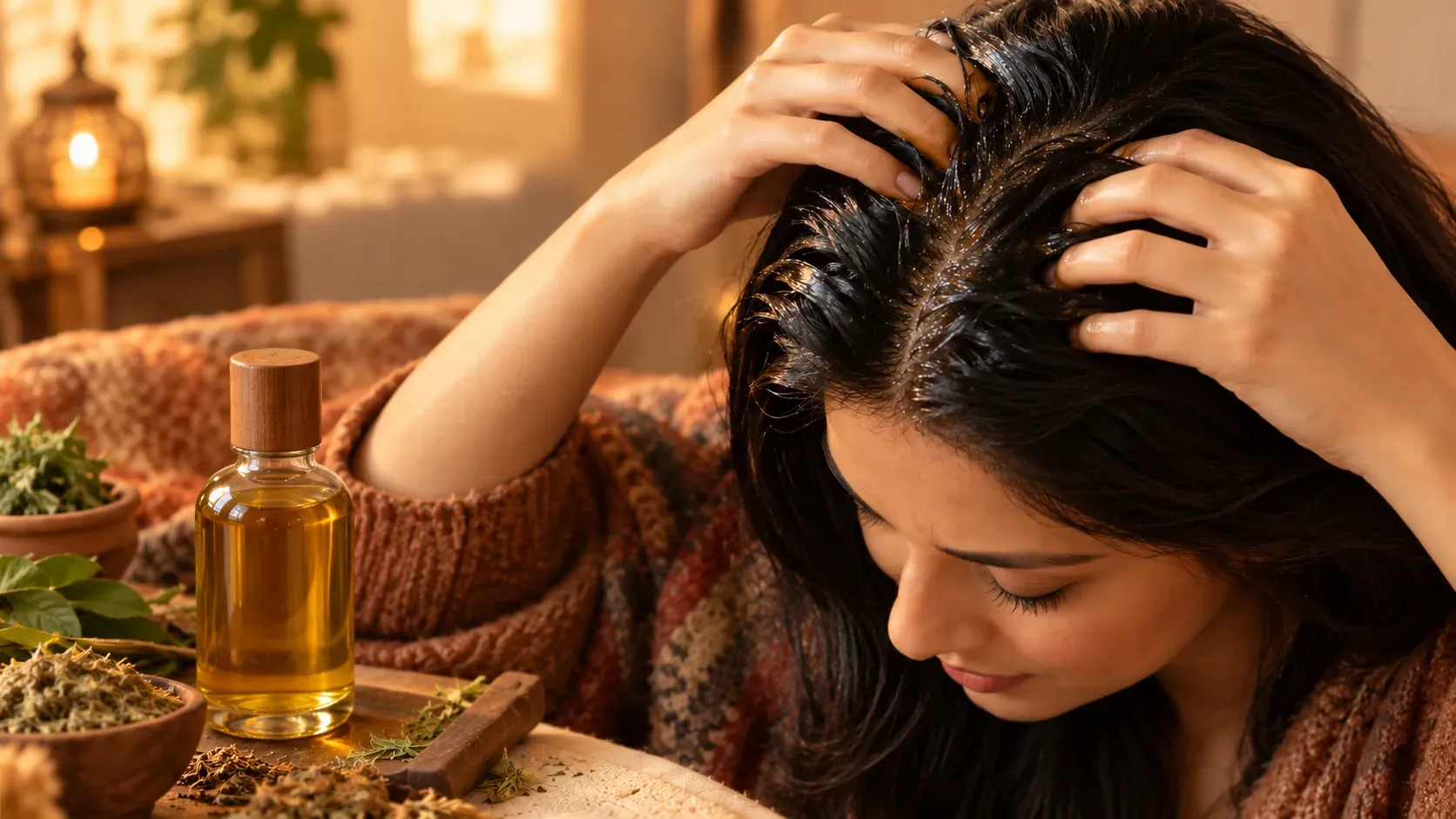
- Warm oil massage, twice a week. Slightly warmed sesame or a Vata-balancing herbal hair oil massaged into the scalp for five to ten minutes improves circulation and replaces lost moisture. Do it an hour before you wash, not right before bed if you're prone to a heavy scalp feeling.
- Turn the shower down. Hot water feels wonderful in winter but it strips natural oils fast. Lukewarm water is kinder to both your scalp and your hair shaft.
- Add healthy fats to your plate. Ghee, walnuts, and flaxseeds support the kind of internal hydration that dry winter air keeps pulling out of you.
A good hair oil matters more in winter than any other season, honestly. It's not about masking a problem with fragrance. It's about giving a stressed, moisture-starved scalp something to actually work with. Our Hair Care range is built around Ayurvedic herbs that specifically target dryness and root weakness, which is exactly what's driving winter shedding in the first place.
One Season, Not Forever
Seasonal hair fall is usually temporary if you address it early. Wait until March hoping it'll fix itself, and you'll likely spend spring trying to recover from months of quiet damage instead. Start the oiling routine now, be a little gentler with hot water, and give your scalp what it's actually asking for.
Your hair isn't failing you. It's just responding to a season that isn't on its side. Help it out a little.
Top Posts


Popular Terms
Leave a Response
Your email address will not be published. Required fields are marked *