
Why Your Joints Hurt More During Monsoon (And How Ayurveda Can Help)
Why Your Joints Hurt More During Monsoon (And How Ayurveda Can Help)
The first monsoon showers bring relief from the heat, the smell of wet earth, and a cup of chai by the window. But for millions of people, they also bring something far less pleasant: stiff knees, aching shoulders, and joints that creak louder than the thunder outside.
If you've noticed your body acting up the moment the clouds roll in, you're not imagining it. There's a real, well-documented reason your joints hurt more during monsoon — and Ayurveda has understood it for thousands of years.
Why Monsoon Is Tough on Your Joints
Modern research confirms what Ayurveda has always said: dropping barometric pressure during rainfall causes tissues around joints to expand slightly, putting pressure on nerve endings. Add in the cold, damp air, and reduced physical activity as people stay indoors, and you have the perfect storm for joint stiffness and pain.
- Increased humidity causes tissue swelling around joints
- Cold, damp weather reduces blood circulation to extremities
- Lower activity levels lead to stiffness building up in muscles and joints
- Existing inflammation (from arthritis or old injuries) tends to flare up
The Ayurvedic Perspective: It's a Vata Dosha Imbalance
In Ayurveda, monsoon is considered a Vata-aggravating season. Vata dosha governs movement, and it is inherently cold, dry, light, and mobile in nature. When the atmosphere turns cold, windy, and damp, Vata in the body rises sharply — and joints, which are considered a primary "seat" of Vata, are the first to feel the imbalance.
This is why joint pain, cracking sounds, and general body stiffness spike specifically during the rainy months, even in people who feel perfectly fine the rest of the year. The Ayurvedic solution isn't just to mask the pain — it's to pacify Vata at its root through warmth, oiling, and grounding routines.
3 Ayurvedic Ways to Ease Monsoon Joint Pain
1. Practice Daily Abhyanga (Warm Oil Massage)
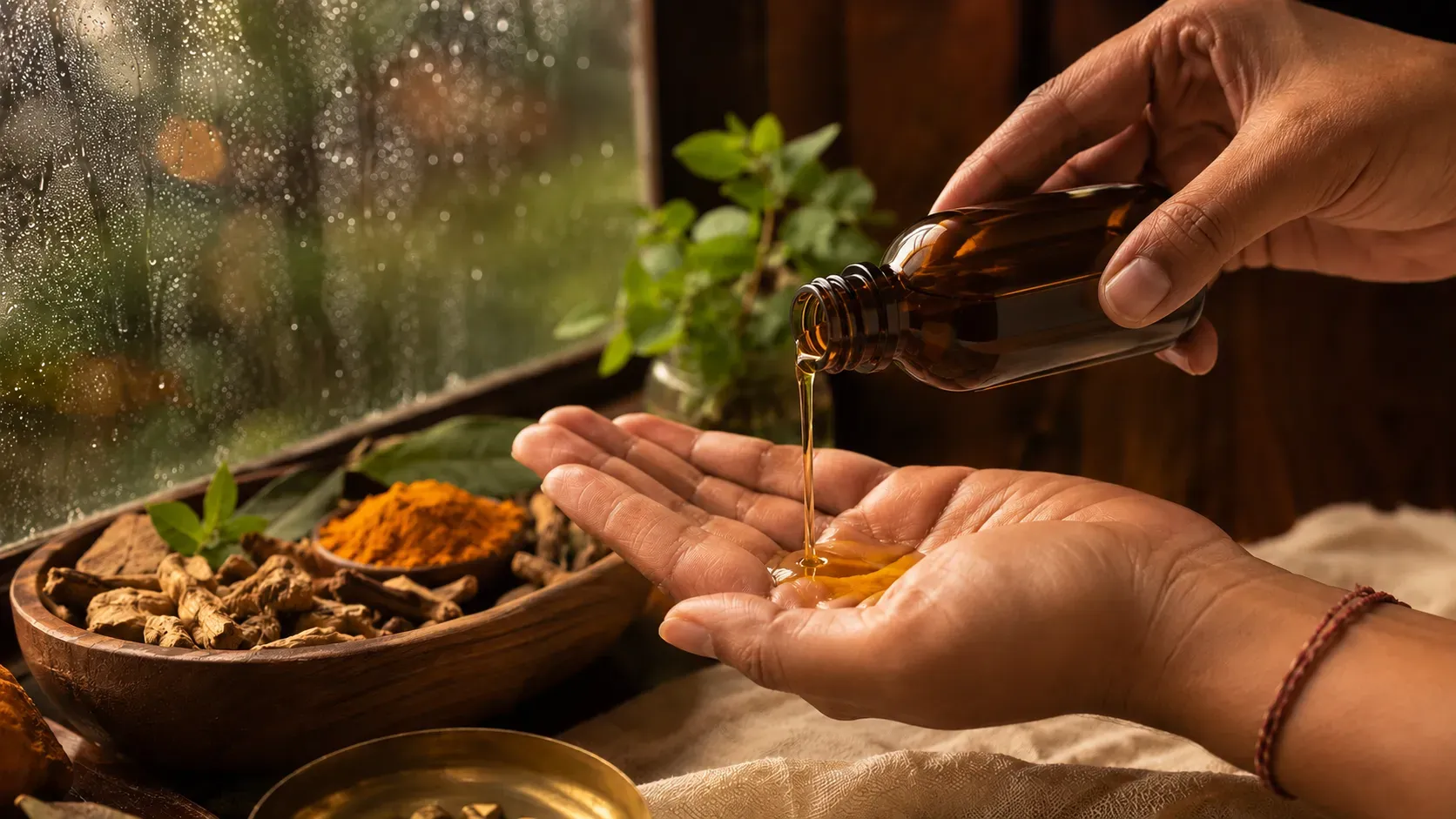
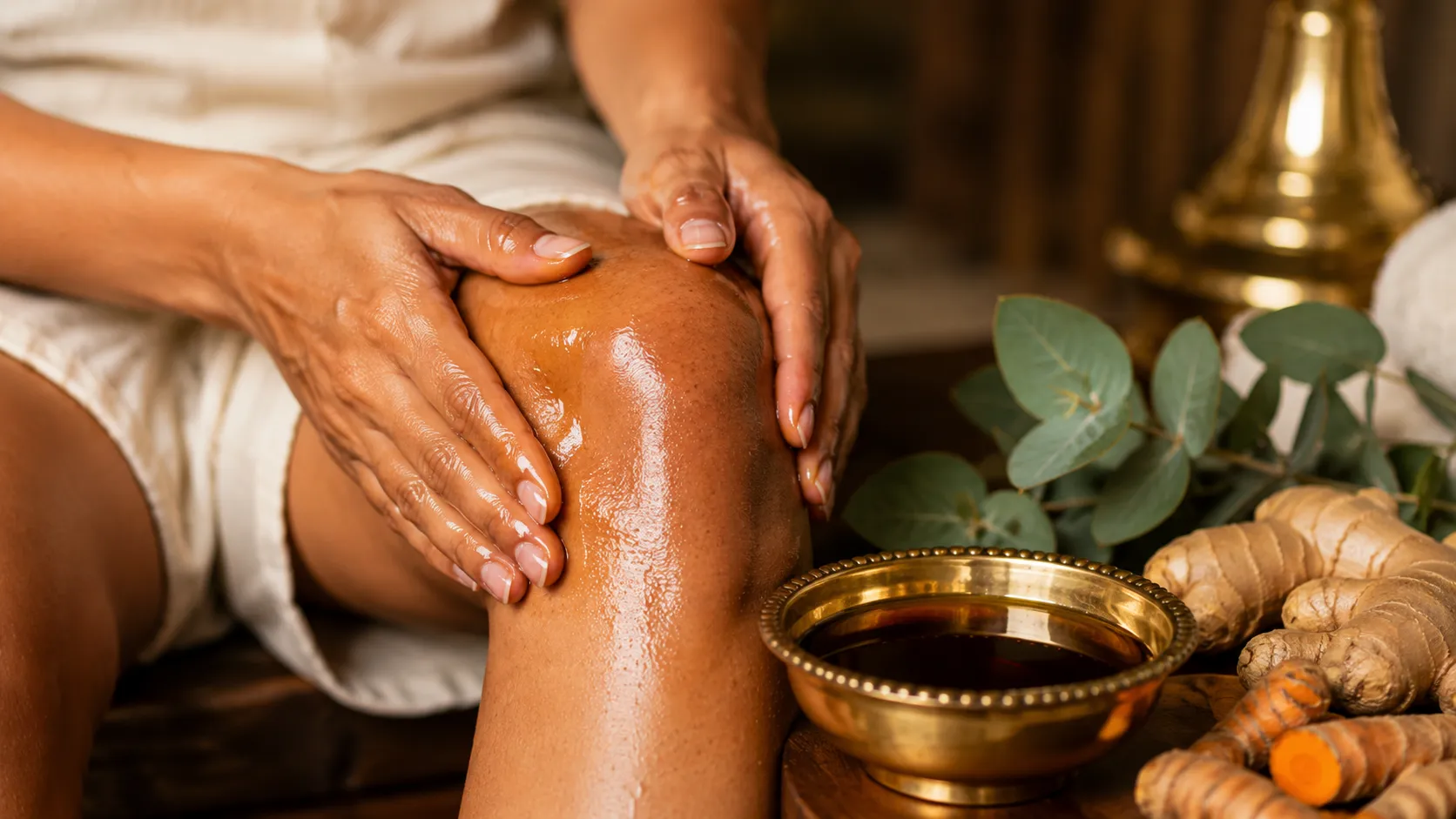
A warm oil massage is one of the most powerful Vata-pacifying rituals in Ayurveda. Herbal-infused oils formulated with warming ingredients like Mahanarayan, Nirgundi, or Ashwagandha penetrate deep into the tissue, improve circulation, and lubricate joints. A gentle self-massage on knees, shoulders, and lower back for just 10 minutes before your bath can make a noticeable difference within days.
2. Keep Joints Warm and Dry
Avoid sitting directly under fans or air-conditioning during monsoon, and try to keep joints covered, especially at night. Cold and damp are the two qualities that aggravate Vata the fastest — simply staying warm and dry can prevent a lot of unnecessary discomfort.
3. Move Gently, Every Single Day
It's tempting to stay curled up indoors when it's raining, but stagnant joints stiffen faster. Light stretching, a short walk indoors, or gentle yoga asanas like Vajrasana or Marjariasana (Cat-Cow) help keep synovial fluid moving and reduce stiffness.
Bringing It All Together
Monsoon joint pain isn't something you simply have to endure every year. By understanding the root cause — an aggravated Vata dosha — you can take targeted, natural steps to stay comfortable and mobile all season long. A consistent oiling ritual paired with warmth and gentle movement addresses the problem at its source, rather than just masking the symptoms temporarily.
If you're looking for a trusted companion for your daily Abhyanga ritual this monsoon, explore our range of Ayurvedic Body Care oils, crafted with traditional warming herbs to help soothe stiff joints and support long-term mobility, naturally.
Recommended Products
Based on what you are reading
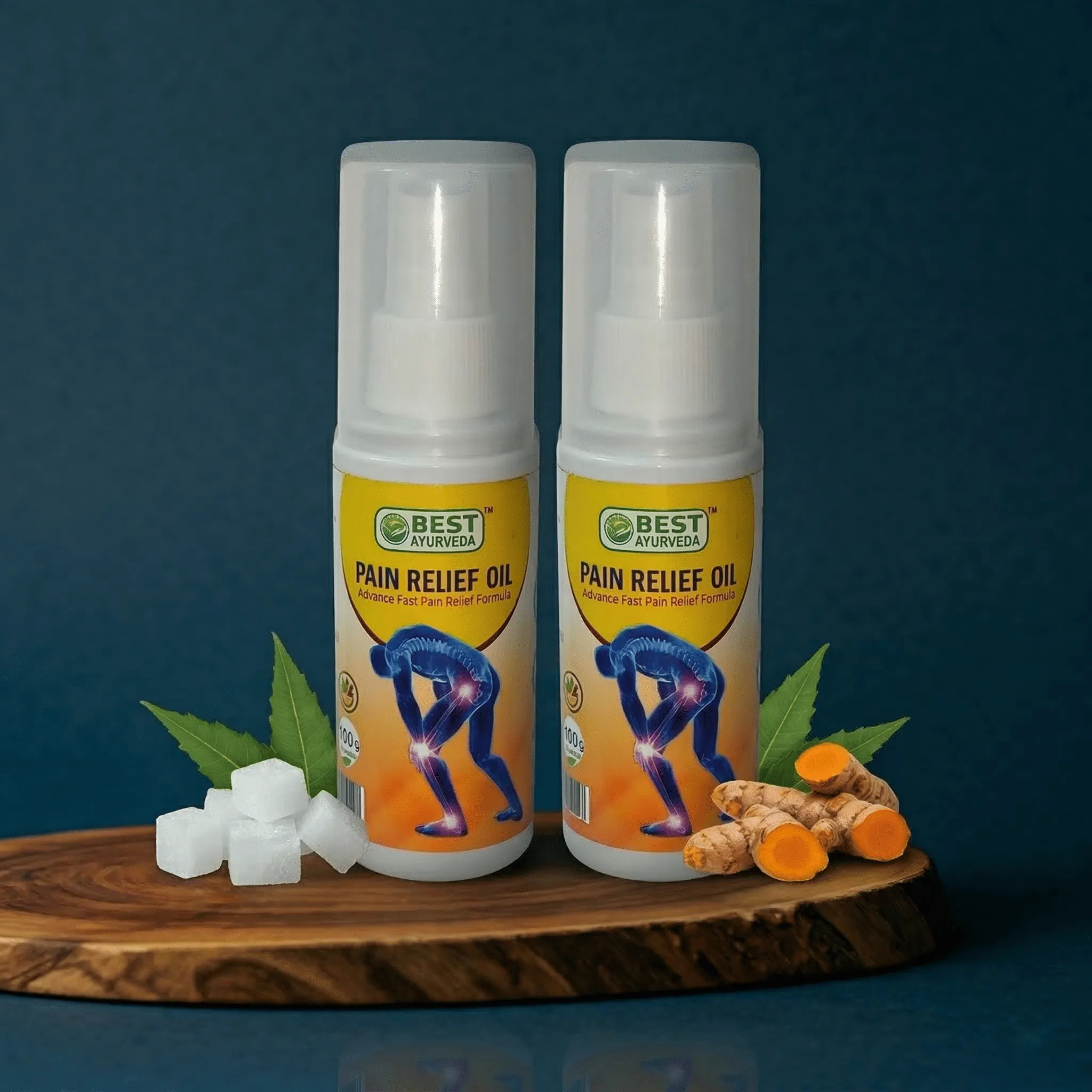
Best Pain Relief Oil - Pack Of 2
Don't let pain slow you down. Save 10% on the Pain Relief Maintenance Duo. Perfect for long-term joint health and elderly care. Get the set!
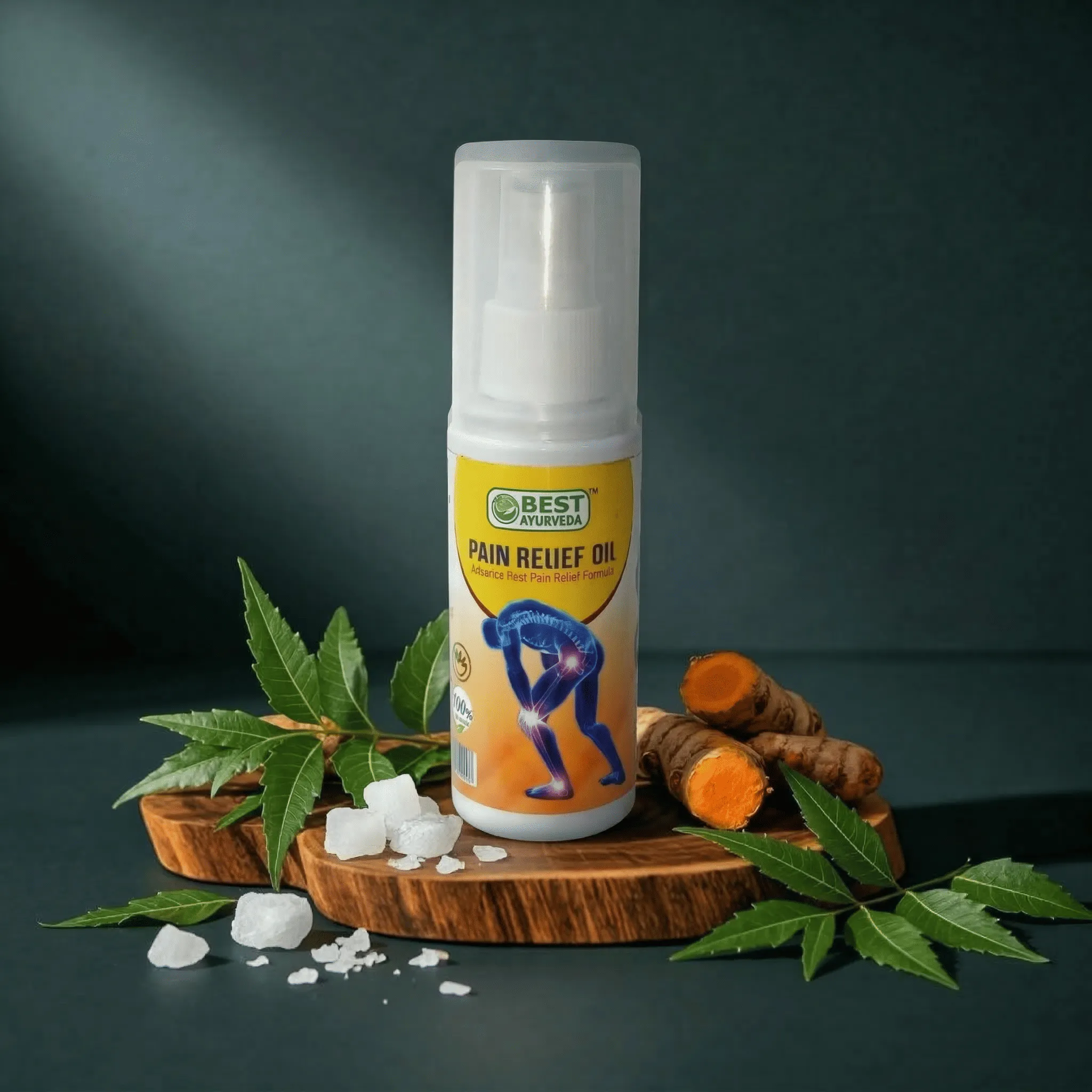
Best Pain Relief Oil - 100ml
Stop living with pain. Get instant relief from joint pain, backache, and muscle stiffness with Best Pain Relief Oil. 100% Natural Ayurvedic Formula.
Top Posts


Popular Terms
Leave a Response
Your email address will not be published. Required fields are marked *